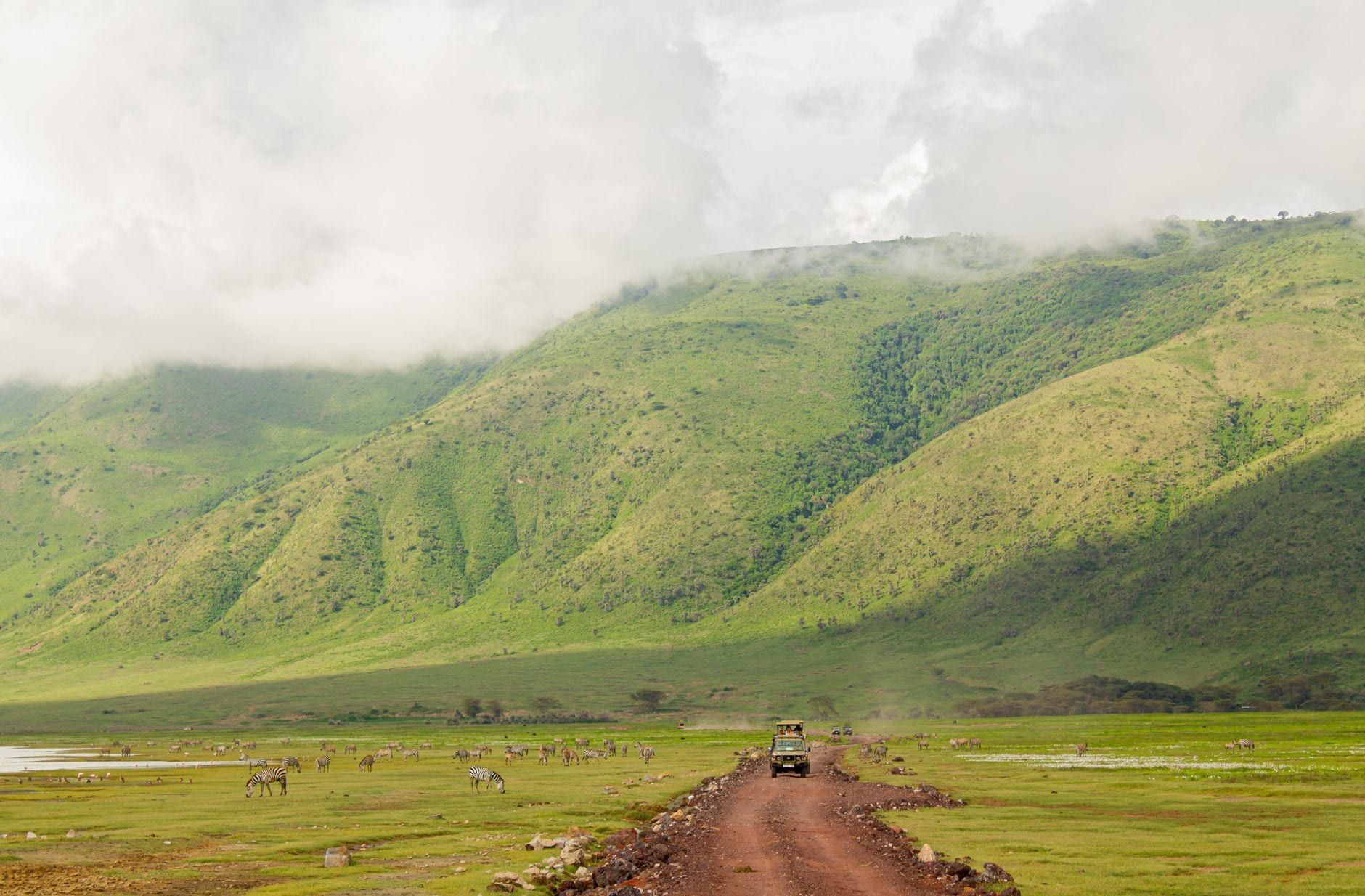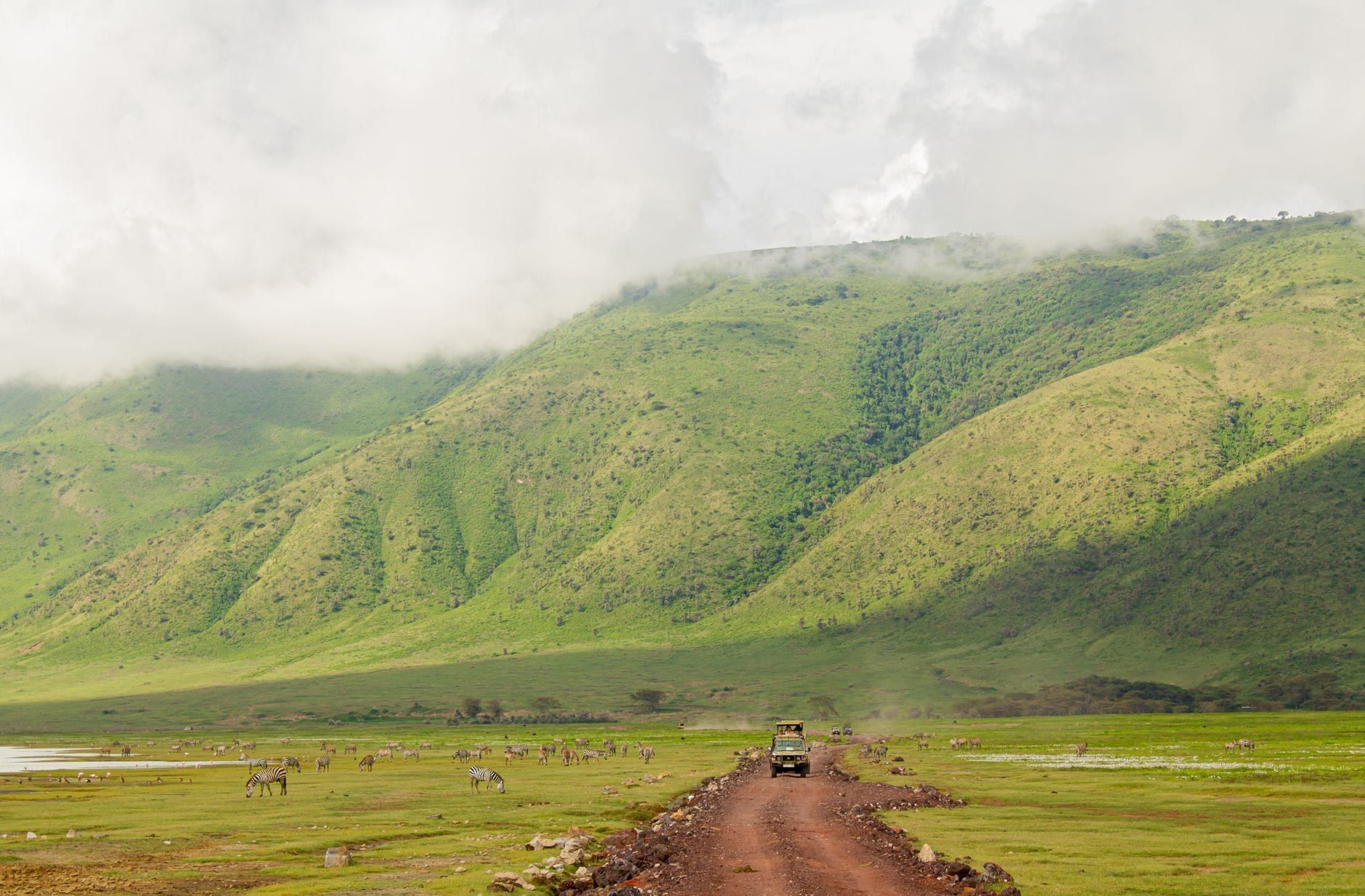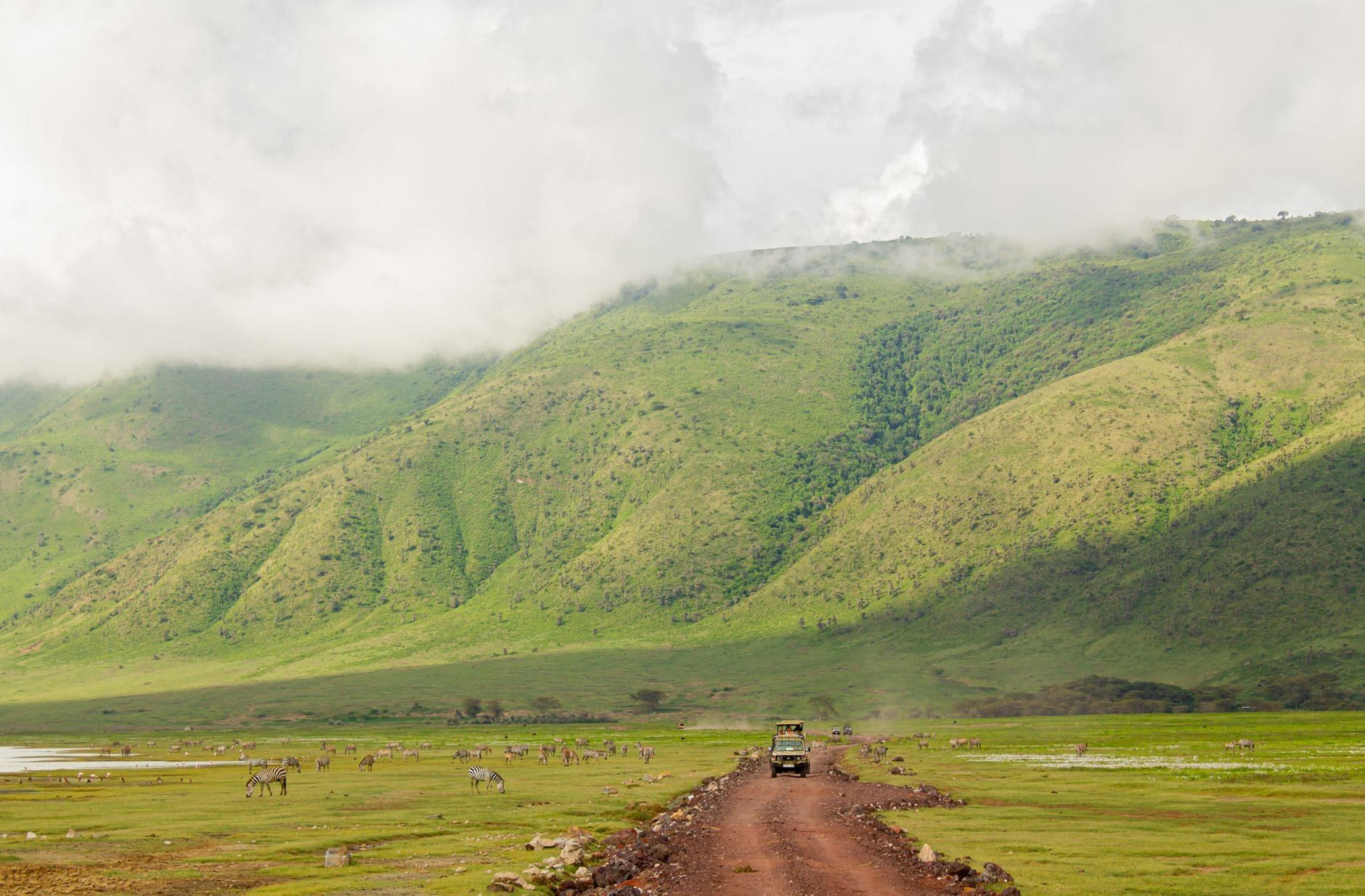
Ngorongoro packs roughly 25,000 large animals into a volcanic bowl you can cross in a morning, and that density is why it anchors most northern Tanzania itineraries. But the crater floor is only part of the story. The wider Ngorongoro Conservation Area — 8,292 km² of highlands, soda lakes, Maasai grazing land and fossil sites — adds guided hikes, village visits and, from January to March, calving season on the Ndutu Plains. This guide covers every activity worth your time, plus the fees, timings and rules that decide how many days you need.
Ngorongoro at a Glance
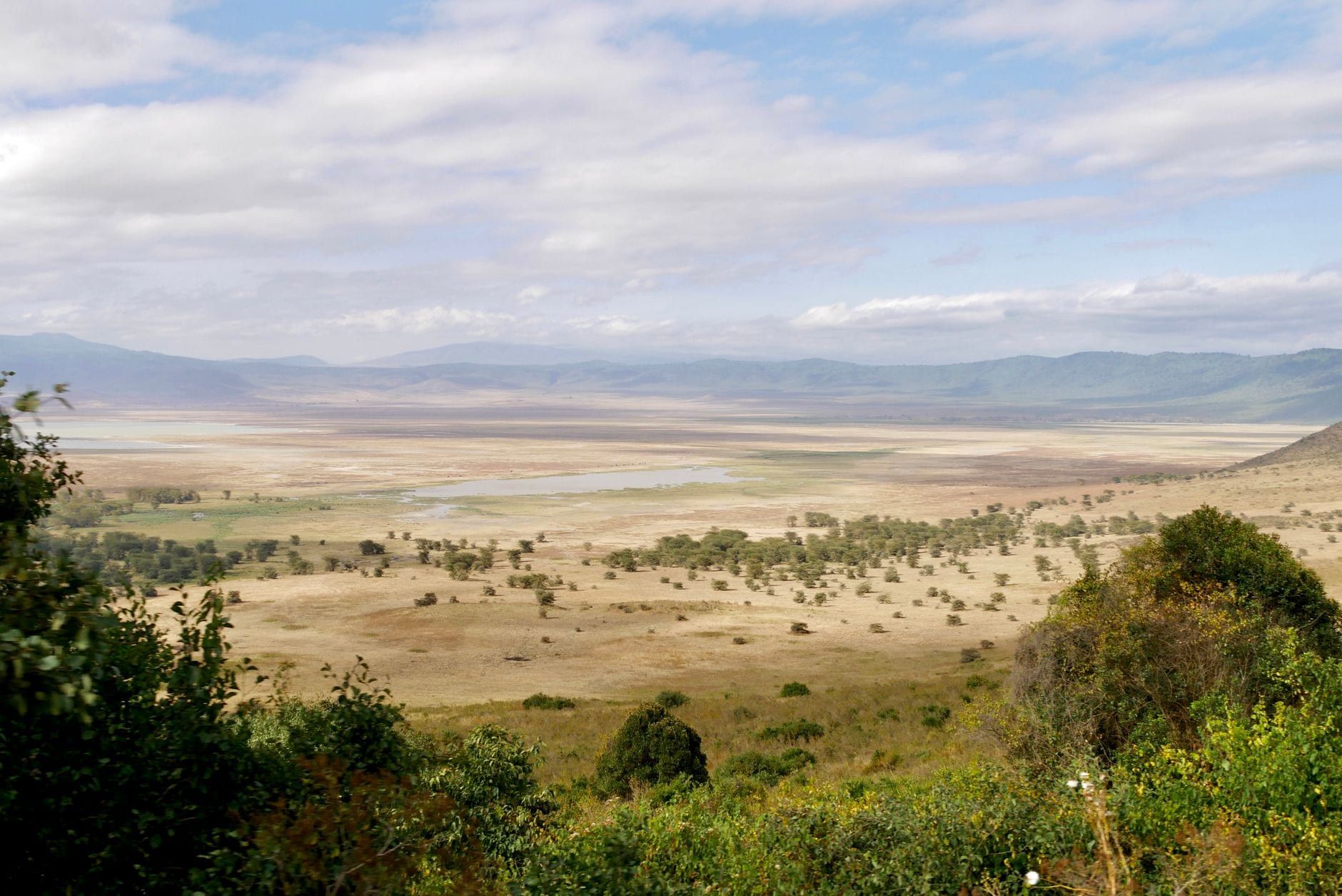
The crater is the world's largest intact, unbroken caldera, formed when a volcano the size of Kilimanjaro collapsed on itself 2.5-3 million years ago. It measures 16-19 km across, with a floor of about 260 km² sitting some 600 m below a rim that tops out near 2,300 m. On clear mornings you can read the whole bowl in one sweep from the edge.
The crater is just 3% of the Ngorongoro Conservation Area, established in 1959 and inscribed by UNESCO in 1979 (its cultural values were added in 2010). Unlike a national park, it's a multiple-use landscape where Maasai pastoralists live and graze livestock, and there are no fences between it and the Serengeti. Wildlife moves freely; so do cattle. If you want the full backstory, our guide to Ngorongoro's history and highlights goes deeper.
The numbers explain the game viewing. Around 25,000 large animals live in and around the crater year-round, so sightings don't depend on migration luck. The catch is cost: entry plus the US$295-per-vehicle descent fee makes Ngorongoro Tanzania's most expensive safari destination, and it received 752,232 visitors in 2023 — the highest number in the NCA's history. Planning around the crowds matters as much as planning the activities.
Logistically, the crater sits about 180 km west of Arusha, a 3.5-4.5 hour drive on the Northern Circuit between Lake Manyara and the Serengeti. Most people reach it as one leg of a multi-park itinerary rather than a standalone trip.
Crater Game Drive: How a Visit Actually Works
The game drive is the reason most people come, and it runs on strict mechanics. Gates open at 6:00 AM and all vehicles must be out by 6:00 PM. Seneto is the descent-only road (its gate closes at 4:00 PM), Lerai is ascent-only, and Lemala takes both directions. Inside those hours, you get a soft six-hour window on the floor — NCAA's own schedule calls the crater tour a half day.
The US$295 crater service fee is charged per vehicle per descent, so almost everyone does one long drive rather than two short ones. Split among five or six travelers in a shared 4x4, that drops to roughly US$49-74 each. Booking through an operator who runs grouped or private crater safaris handles the prepaid permit — you'll need the receipt or serial number at the gate.
A typical loop works clockwise through the floor's signature spots. The Lerai Forest on the southern slopes holds the elephants; Lake Magadi, the shallow soda lake at the centre, draws flamingos when water levels suit; the reedy Gorigor Swamp conceals hippos and is where rhinos most often appear; the open eastern grasslands are lion country. The route finishes, for most groups, with a boxed lunch at Ngoitokitok Springs — a designated picnic site beside a hippo pool, and one of the only places on the floor you may leave the vehicle. A hot bush lunch needs a US$10-per-person permit, issued first come, first served.
Photographers should be aggressive about the first two hours. Light is at its best from 6:30 to 8:30 AM, mist off the floor, predators still hunting. Shoot from the vehicle — off-roading is banned — with a beanbag on the sill; a 300 mm lens covers roadside lions, and binoculars pick out rhino on the far slopes.
Wildlife You're Likely to See (and What to Look For)
Four of the Big Five in one morning is a realistic ask; leopard is the holdout, present in the Lerai Forest but rarely seen. Buffalo come in herds you'll struggle to count. Lions are near-certain.
The black rhino is the crater's prize. Roughly 26-40 animals live here under 24-hour ranger protection, one of Africa's most accessible populations. Your best odds are early morning near the Gorigor Swamp, when the rhinos graze the open flats — ask your guide to make that the first stop, not the last.
Lions are the other headline. The crater holds 55-plus — the densest known population in Africa — with darker, heavier manes than their cousins on the plains. The flip side is genetic: most descend from roughly six founding males, and the inbreeding that followed is a live conservation concern. Around 300 elephants live here too, almost all old bulls with outsized tusks — some 75 genuine big tuskers — plus more than 6,000 spotted hyenas.
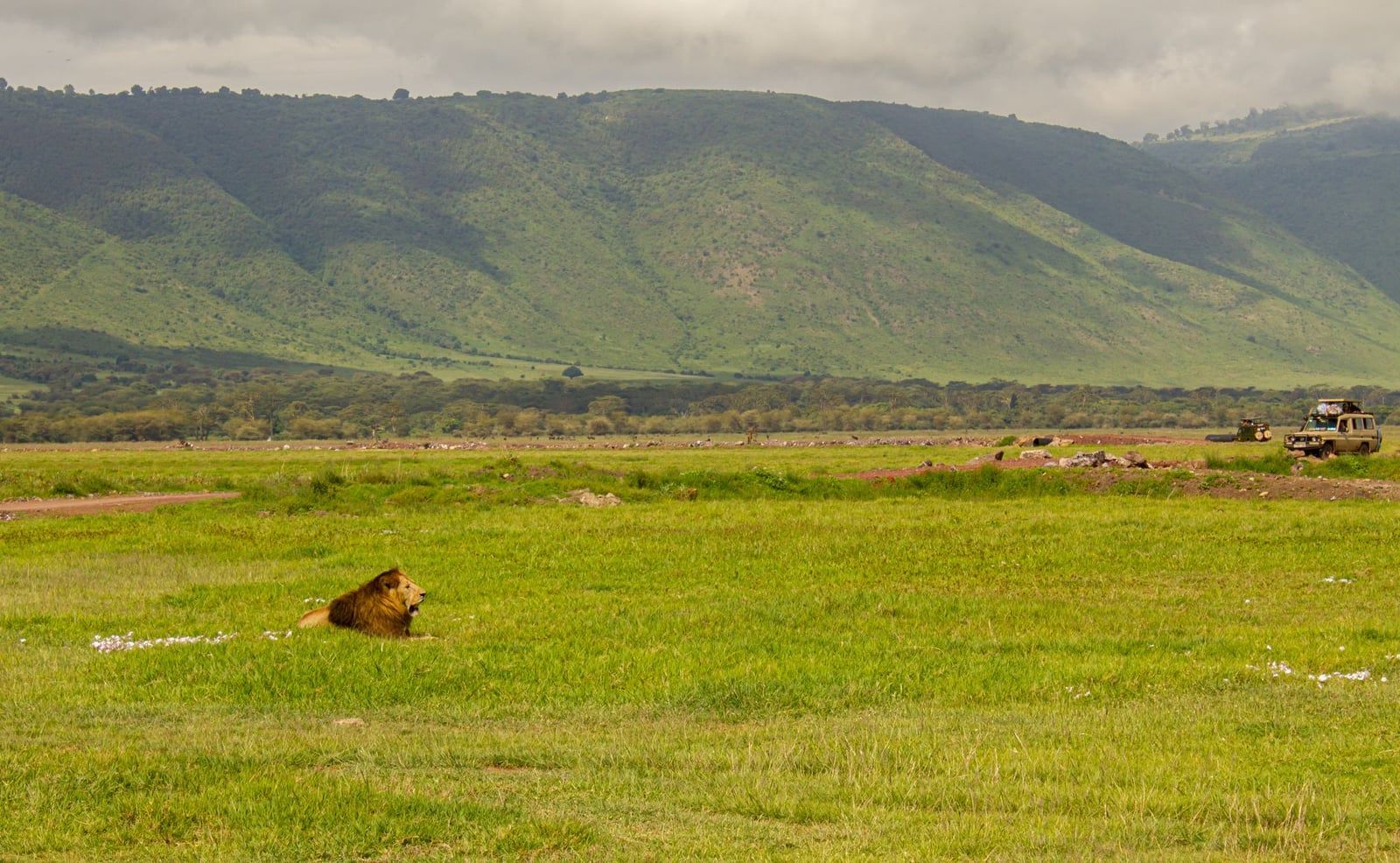
One surprise: no giraffes. The 600 m walls are too steep for them to descend, though they're abundant in the wider NCA and the Serengeti. For a full species-by-species breakdown, see our guide to Ngorongoro Crater's animals.
Birders get 500-plus species. Flamingos mass on Lake Magadi, and the easy ticks — ostrich, secretary bird, Kori bustard, grey crowned crane — are all visible from the vehicle. Variety peaks from November to April, when Palearctic migrants arrive. A morning on the floor reliably produces 40-50 species without trying.
Crater Rim Walks and Viewpoints
You cannot walk inside the crater — only Maasai may cross the floor on foot. Walking happens on the rim and in the highlands, and a guided rim walk of two to three hours is the easiest version. NCAA charges US$23.60 per adult for a walking permit, with a maximum of eight walkers per guide.
What you get is scale, silence and detail the vehicle misses. The eastern wall is thick montane forest; the western side is drier, cloaked in euphorbia. Guides read elephant tracks, point out turacos and martial eagles, and explain the plants the Maasai use. Don't expect big game at close quarters — buffalo sign, maybe a distant leopard's presence. The point is the perspective, and the near-total absence of other tourists.
Heroes' Point and the other rim lookouts are the classic first-view stops, usually on the drive in — arrive early, because by mid-morning the viewpoints can have a queue of safari vehicles. Pair a rim walk with your crater descent on consecutive days: drive the floor first, walk the rim the following morning while your legs still want movement.
Hiking Empakaai and Olmoti Craters
Two smaller calderas northeast of the main crater allow real hiking, and they could not be more different in effort. Both are covered by conservation area tours from the Ngorongoro side, usually as full-day add-ons.
Empakaai Crater
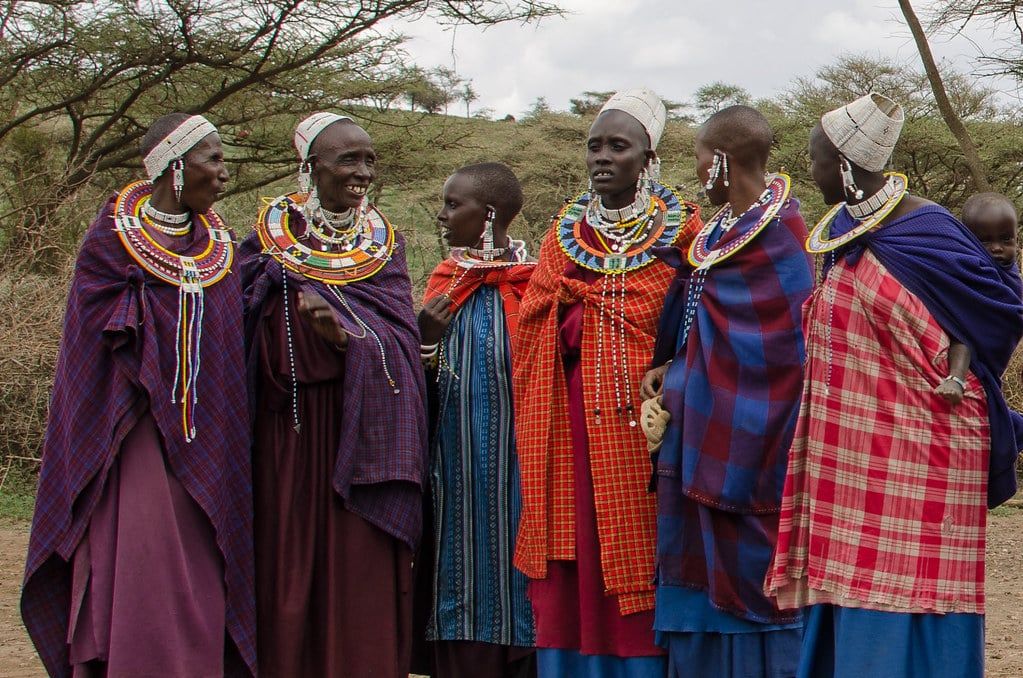
Empakaai is 6 km wide and about 300 m deep, with a soda lake at the bottom that often turns pink with flamingos. The descent is steep — around 30 minutes down through forest, longer coming back up — and every party walks with an armed ranger and a Maasai guide. Budget the whole day including the bumpy drive out. The reward is exclusivity: often only one hiking party reaches the floor on a given day, and blue monkeys, bushbuck and buffalo are regular company along the trail.
Olmoti Crater
Olmoti is the easy sibling, less than 20 km from Ngorongoro Crater and walkable in one to two hours on a historic Maasai cattle path. The trail runs toward the Munge Waterfall, which spills from the crater's rim into the valley below. Expect buffalo, zebra and hyena, with occasional elephant and leopard. Because it's so close, Olmoti combines naturally with a game drive the same day — crater floor in the morning, crater rim on foot by late afternoon. Bring cash for guide tips and a packed lunch either way.
Olduvai Gorge, Laetoli and the Shifting Sands
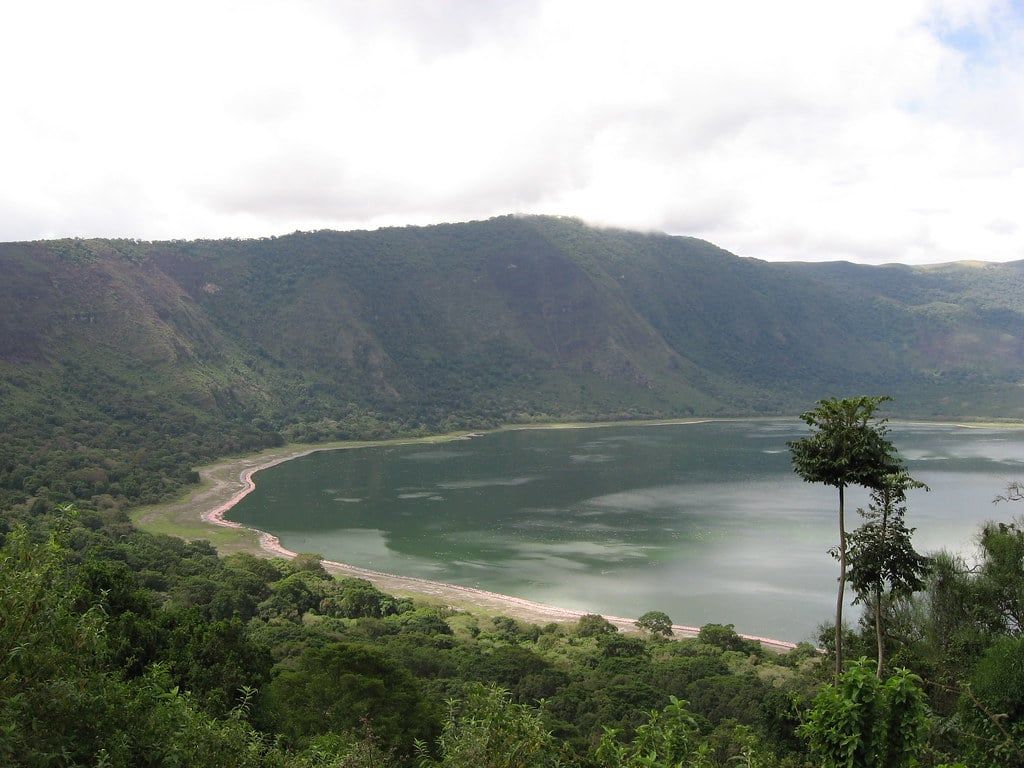
Olduvai Gorge — locally spelled Oldupai — is a 14-km ravine roughly halfway between the crater and the Serengeti, and it's the most rewarding leg-stretch stop in East Africa. Mary Leakey found the 1.75-million-year-old skull of Paranthropus boisei here in July 1959, and the gorge's deposits span some 2.1 million years of the human story. A small museum displays fossils and hominid casts, and a guided walk down into the gorge plus the museum takes about 90 minutes — book a licensed guide, since one is required. Museum entry for foreign non-residents runs around US$35.
Nearby Laetoli preserves a 27-metre trail of hominid footprints left 3.6 million years ago — among the earliest evidence of upright walking. The fragile trackway itself is protected and closed, but casts are displayed at the Oldupai museum, which is the honest way most visitors "see" them.
East of the gorge, the Shifting Sands are a pair of magnetic volcanic-ash dunes that creep roughly 17 metres eastward each year, holding their crescent shape as they travel. Guides stop here on request between the crater and Naabi Hill Gate. Most people slot Olduvai into combined Ngorongoro-Serengeti itineraries, where it breaks up the drive perfectly.
Meeting the Maasai
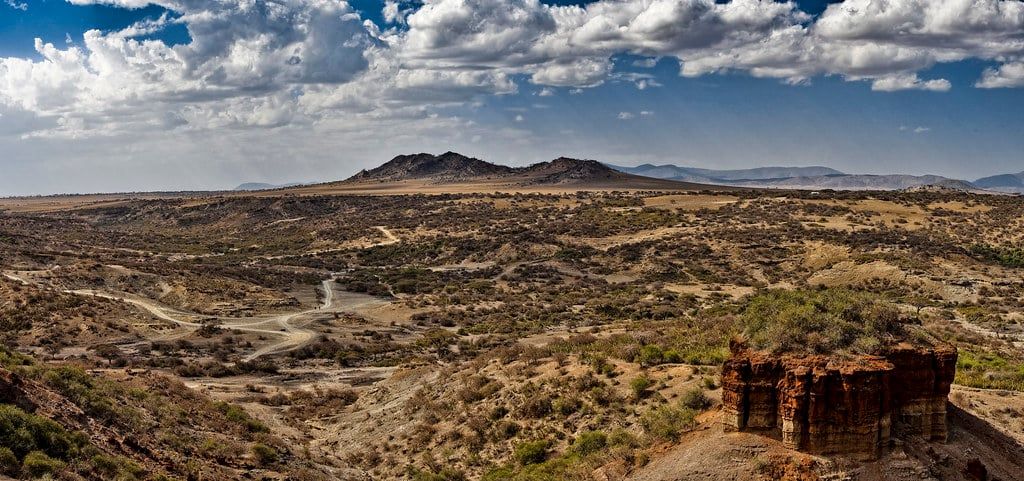
The NCA is the only large Tanzanian protected area where people live inside the borders. Maasai herders share the grasslands with wildlife under the multiple-use model — though not inside the crater itself, which is off-limits to grazing. A village (boma) visit is the standard way to encounter this, and most crater-rim roads pass several bomas.
A typical visit runs one to two hours: a per-person fee paid by your guide, a village elder as host, a walk through a home, the jumping dance, and often a chance to try on beaded dress or see the preschool. Go in with clear expectations. There will be strong pressure to buy crafts, payment is in cash, and the villages nearest the rim see heavy tourist traffic — some are essentially staged for it. Choose a responsible operator and ask directly how the visit fee reaches the community; the good ones will answer with specifics.
Context worth knowing: between June 2022 and September 2024 roughly 10,000 Maasai were relocated out of the NCA, and in December 2024 Tanzania's president acknowledged past violations and pledged to address land disputes. A village visit here carries more weight than the dancing suggests. Ask permission before photographing anyone, and cover shoulders and knees.
Ndutu Plains, the Great Migration and Balloon Safaris
From January to March the Great Migration's wildebeest and zebra herds concentrate on the Ndutu Plains in the NCA's northwest to calve — thousands of newborns in a few weeks, with lions, cheetahs and hyenas working the herds constantly. One clarification that trips people up: the calving happens on the short-grass plains at the NCA-Serengeti border, not on the crater floor. If your dates align, a crater day plus an Ndutu day is the strongest wildlife pairing in Tanzania.
The plains are good birding too — Kori bustard, secretary bird and grey crowned crane are all easy here in the green months, when the landscape is at its lushest.
A hot-air balloon safari is the splurge option at roughly US$450-500 per person. Flights launch at dawn, stay aloft one to 1.5 hours depending on wind, and end with a bush breakfast. They work best over the short-grass plains in green season, when you can drift over the herds rather than the dry-season dust. It's a big add-on to a trip that's already expensive — worth it if this is your once-in-a-lifetime safari, skippable if it isn't.
Planning Your Visit: Costs, Timing, Where to Stay and How Long
The fee stack for foreign non-residents: US$70.80 per adult per 24 hours (US$23.60 per child aged 5-15, under-5s free), US$295 per vehicle per crater descent, and a US$59 per person per night concession fee if you sleep inside the NCA. Worked examples: a couple day-tripping from Karatu pays about US$437 in fees alone for one descent; the same couple spending a night on the rim pays roughly US$555. Fees are prepaid electronically or through your operator, and tariffs can change each 1 July with little notice — verify current rates on official hours and fees shortly before travel.
Timing follows two windows. June to October is the dry season — short grass, animals concentrated around permanent water, the easiest rhino and big-cat spotting, and July-September brings peak crowds to match. January-February is the smart alternative: green scenery, migratory birds, calving on the nearby plains and fewer vehicles. Mid-March to mid-May is the long rains; tracks turn muddy and occasionally impassable, though green-season lodge rates can run 30-50% below peak. Our month-by-month guide has the full breakdown.
| Activity | Time needed | Fitness | Extra cost | Guide |
|---|---|---|---|---|
| Crater game drive | 5-6 hours | Easy (vehicle) | US$295/vehicle | Licensed guide required |
| Rim walk | 2-3 hours | Easy | US$23.60 pp | Guide required |
| Empakaai hike | Full day | Moderate | Ranger + guide fees | Armed ranger + Maasai guide |
| Olmoti walk | 1-2 hours | Easy | Guide fees | Guide required |
| Olduvai Gorge | ~90 minutes | Easy | ~US$35 museum | Guide required |
| Maasai village visit | 1-2 hours | Easy | Per-person fee | Arranged via your guide |
How long to stay depends on what you want. One five-to-six-hour drive is the standard crater visit, and NCAA permits one entry. Two nights is the sweet spot: descend the crater the first morning, then use the second day for Empakaai, Olmoti or Ndutu rather than driving straight to the Serengeti.
Getting there: the drive from Arusha is 180 km and 3.5-4.5 hours, passing through Mto wa Mbu (the last reliable fuel) before climbing the Rift Valley wall to Loduare Gate. Flying is the alternative — daily light-aircraft services reach Lake Manyara Airstrip in about 45 minutes for US$150-250 one-way, then 1-1.5 hours by road to the rim. A licensed guide is mandatory for the crater and Oldupai; self-drive is technically possible in the NCA but the 4x4-only descent roads and fee logistics make an operator the practical choice for nearly everyone. Families face no age limit, though children around 7-8 and up get the most from it. Ngorongoro also slots neatly into Northern Circuit routes with Tarangire, Lake Manyara and the Serengeti.
Rim lodging or Karatu?
This is the accommodation decision, and it's really a time-and-money trade — see our round-up of the best lodges for specific picks.
| Staying on the crater rim | Staying in Karatu | |
|---|---|---|
| Gate arrival | On the floor by ~6:30 AM, 45-60 min ahead of Karatu traffic | Floor arrival ~7:00-7:30 AM after a pre-dawn drive |
| Cost | Expensive, plus US$59 pp/night concession fee | Budget-friendly, wide range of lodges and guesthouses |
| Nights | 0-5°C at 2,300 m, often with mist | Milder, lower elevation |
| Location | Minutes from the descent gates and rim viewpoints | ~50 km from the gate, near farms and the Arusha road |
One rim night before your descent, then Karatu, is the compromise many travellers land on. Pack for both climates either way: cold rim mornings demand a fleece and windbreaker, while the floor 600 m below warms up fast.
Finally, the hour-by-hour version of a well-run crater day:
- 5:30 AM — leave the rim lodge in the dark; Karatu-based vehicles leave by 5:00.
- 6:00 AM — gates open; descend the one-way Seneto road, about 30 minutes down.
- 6:30-8:30 AM — best light; go straight to Gorigor Swamp for rhino.
- 9:30 AM — Lerai Forest for the elephant bulls, then Lake Magadi's flamingos.
- 12:00 PM — boxed lunch at Ngoitokitok Springs, watching the hippo pool.
- 2:00 PM — eastern grasslands for lions; start the Lerai ascent by 3:00, since Seneto's descent gate closes at 4:00.
- 6:00 PM — every vehicle is out; catch the rim view on the drive back.
Frequently asked questions
How many days do you need in Ngorongoro?
One 5-6 hour game drive is the standard visit, and NCAA permits a single crater entry. Two nights in the area is the sweet spot — it lets you add the Empakaai or Olmoti hike, or a day on the Ndutu Plains in calving season, without rushing.
Is Ngorongoro worth the high fees?
Fees alone run about US$437 for a couple on a day trip (two adult entries plus the US$295 vehicle descent fee). What you get back is wildlife density among Africa's highest, four of the Big Five in a morning, and some of the best black rhino odds on the continent. For most first-time safari-goers, yes.
Can you see the Big Five in one game drive?
Four of the five — lion, elephant, buffalo and black rhino — are realistic in a single morning. Leopard is the holdout: it lives mainly in the Lerai Forest and is seen only occasionally.
Are there giraffes in Ngorongoro Crater?
No. The caldera walls are too steep for them to descend. Giraffes are abundant in the wider Conservation Area and the Serengeti, so you'll see them on the drive between parks.
Can you walk inside Ngorongoro Crater?
No — only Maasai may walk the crater floor. Visitors can do guided walks on the rim (US$23.60, maximum 8 per guide) and full hikes inside Empakaai and Olmoti craters with an armed ranger or Maasai guide.
When is the best time to visit Ngorongoro?
Wildlife is resident year-round. June-October gives the best visibility and easiest spotting; January-February adds green scenery and the Ndutu calving; April-May's long rains make roads difficult, though prices drop sharply.
Should you stay on the crater rim or in Karatu?
Rim lodging puts you on the floor by about 6:30 AM, ahead of the crowds, but costs more (plus the US$59 pp/night concession fee) and nights drop to 0-5°C. Karatu is roughly 50 km away, cheaper, and gets you to the floor around 7:00-7:30 AM.
Can you self-drive in Ngorongoro?
Self-drive is technically possible in the Conservation Area, but a licensed guide is mandatory for the crater descent, the descent roads are 4x4-only, and the prepaid-fee logistics are fiddly. Nearly all visitors book a vehicle with driver-guide from Arusha, Moshi or Karatu.