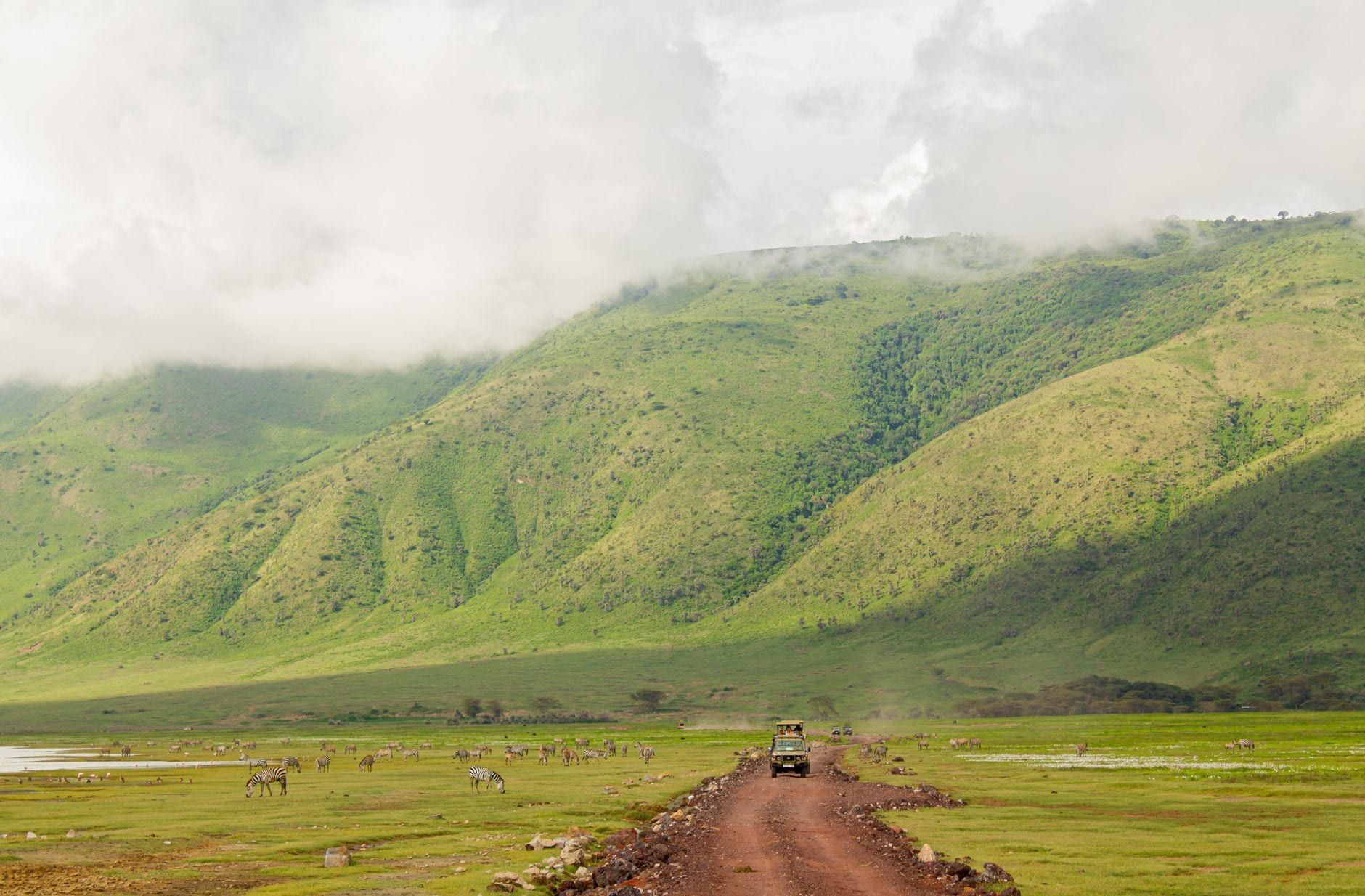
Ngorongoro Crater has no bad wildlife month. Roughly 25,000 large animals live year-round inside the world's largest intact caldera, hemmed in by walls that rise 400 to 610 metres, so the timing question here is never whether you'll see game — it's how much grass, rain, traffic and cost you're willing to trade for the best possible sightings.
That makes choosing your month genuinely strategic rather than routine. This guide walks through the verdict up front, then season by season and month by month, with the crowd numbers, fee math and booking windows most when-to-go guides skip. For everything beyond timing, our complete Ngorongoro safari guide covers routes, lodges and itineraries.
Best Time to Visit Ngorongoro Crater at a Glance
Go June to October if game viewing comes first. The long dry season flattens the grass, pulls animals to permanent water, and makes the crater's lions and black rhinos as visible as they ever get. Go April to May if budget and elbow room come first: the long rains paint the caldera green, drop lodge rates to their lowest, and clear the roads of traffic — while the resident wildlife stays put.
Between those poles sits the short dry season of January to mid-March, when the wildebeest calving on the Ndutu plains draws predators and photographers, and the short rains of November to mid-December, when afternoon storms freshen the scenery without wrecking morning drives.
| Months | Wildlife | Crowds | Price | Best for |
|---|---|---|---|---|
| Jan–Feb | Good | Moderate | Mid | Calving on the Ndutu plains |
| Mar–May | Good | Very low | Low | Green season value, May wildflowers |
| Jun | Excellent | Low–moderate | Mid | Cool, green shoulder month |
| Jul–Sep | Excellent | Very high | High | Peak game viewing |
| Oct | Excellent | High | High | Predator action at the end of the dry |
| Nov–Dec | Good | Low–moderate | Low–mid | Birding, newborns, photography |
If you can only pick one month, make it late June or September — dry-season viewing at the quiet edges of the peak, before the July–August crush or after it thins.
How Ngorongoro's Seasons Work (and Why Timing Is Different Here)
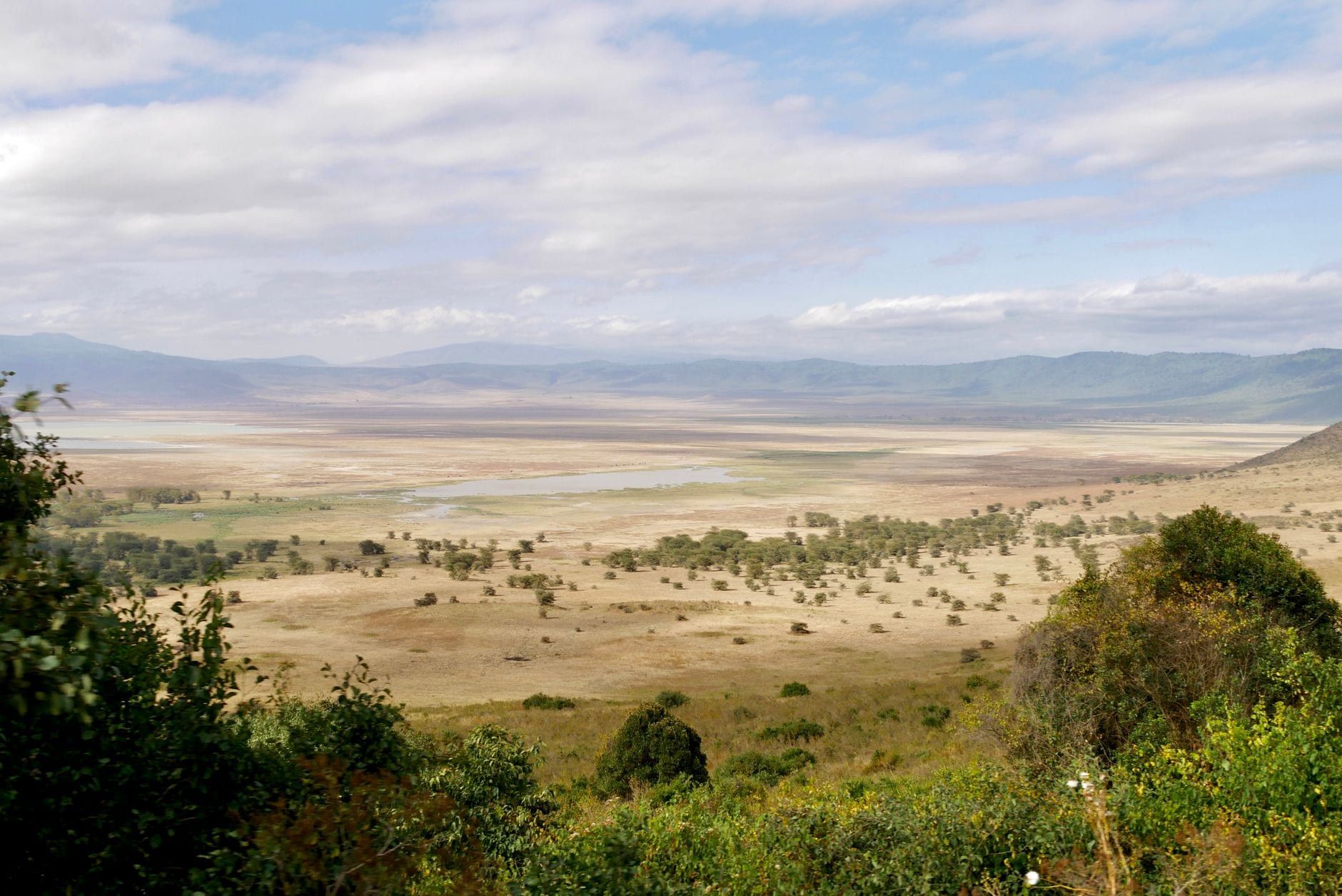
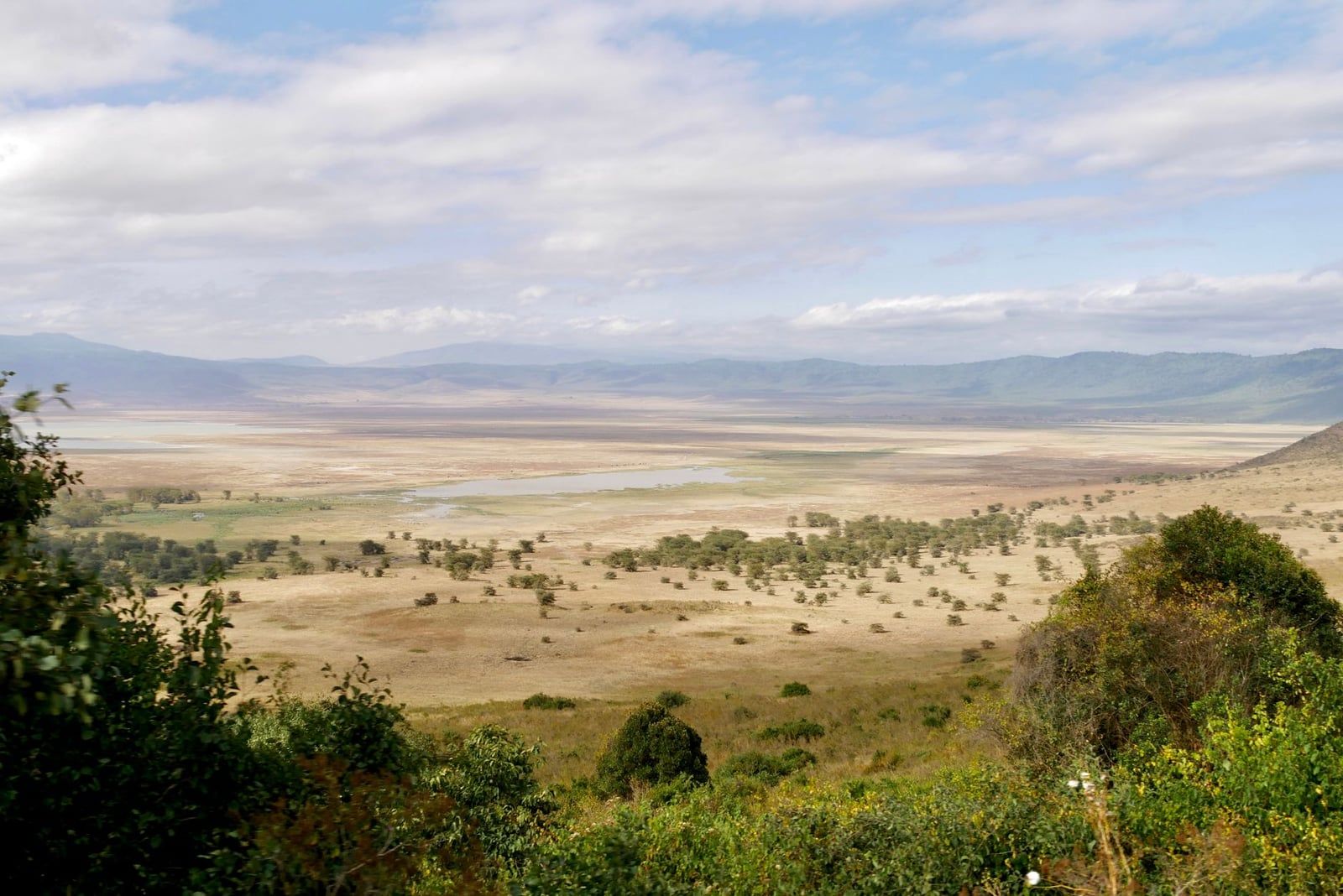
The caldera changes the whole when-to-go calculus. Steep walls and year-round water on the roughly 260 km² floor trap a resident population — the animals of Ngorongoro largely stay put while Serengeti herds migrate hundreds of kilometres. Your month therefore buys visibility, not presence: in the dry season the grass is short and animals cluster at waterholes; in the wet season the grass grows long, animals scatter, but black rhinos wander into the open to graze on the fresh growth.
The calendar runs on two dry seasons and two rainy ones. The long dry stretches June to October; the short dry runs January to mid-March. The long rains fall from late March through May as near-daily thunderstorms from April onward, and the short rains arrive in November, easing off by mid-December.
Altitude splits the weather in two as well. The crater floor sits near 1,700–1,800 m with mild afternoons — about 19°C in the dry seasons, 23°C in the wet — while the rim at 2,200–2,300 m gets cold, misty nights that can feel close to freezing even in July. Pack for both in a single day; the descent drops you 600 m in about half an hour.
The Four Seasons, One at a Time
Each of Ngorongoro's four seasonal windows suits a different traveller. Here's what actually happens on the ground in each one.
Long dry season (June to October)
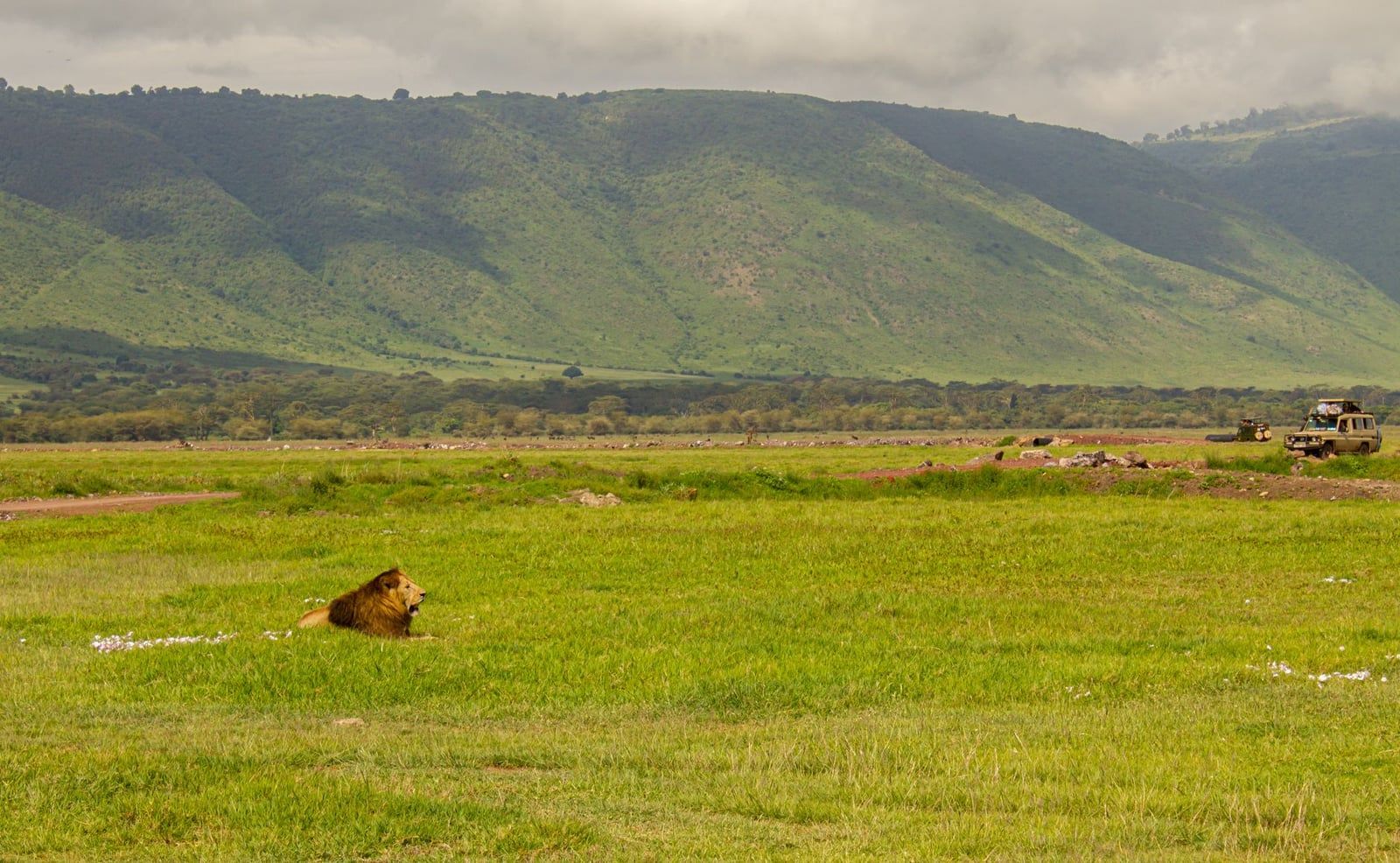
This is the window the brochures sell, and the reputation is earned: sparse vegetation and permanent water concentrate wildlife so tightly that guides routinely find lion, rhino and cheetah within a few hundred metres of each other. Black rhinos stand out against the short grass — the population here hovers around 30 animals — and big-cat sightings come easy, helped by Africa's densest known lion population.
The trade-off is traffic and cost. July through September brings the year's heaviest vehicle queues and peak lodge rates, with rim lodges booking up to a year ahead. Bookend it instead: early June still wears the green aftermath of the rains, and October closes five dry months with animals weakened by drought, which raises the odds of witnessing an actual hunt. Note one quirk — elephants tend to leave the crater floor in the dry season, so the big tuskers of the Lerai Forest thin out until the rains return.
Short dry season (January to mid-March)
January to mid-March is a dry spell most safari planners overlook, and it doubles as the calving window. Around 500,000 wildebeest calves are born within a few weeks around February on the short-grass plains of the southern Serengeti and Ngorongoro Conservation Area — the roughly 1.5-million-strong migration herds reach the Ndutu and western NCA plains from about mid-December and stay until late March. Calves mean predators, and lots of them.
Be clear about geography, though: the calving happens on the Ndutu plains of the wider conservation area, not the crater floor, which keeps its own residents regardless. Combine the two — a crater descent plus a day or two on the plains — and Ngorongoro and Serengeti combination tours cover both halves neatly. February is busier than January in this window, so early birds get the quieter version.
The long rains (late March to May)
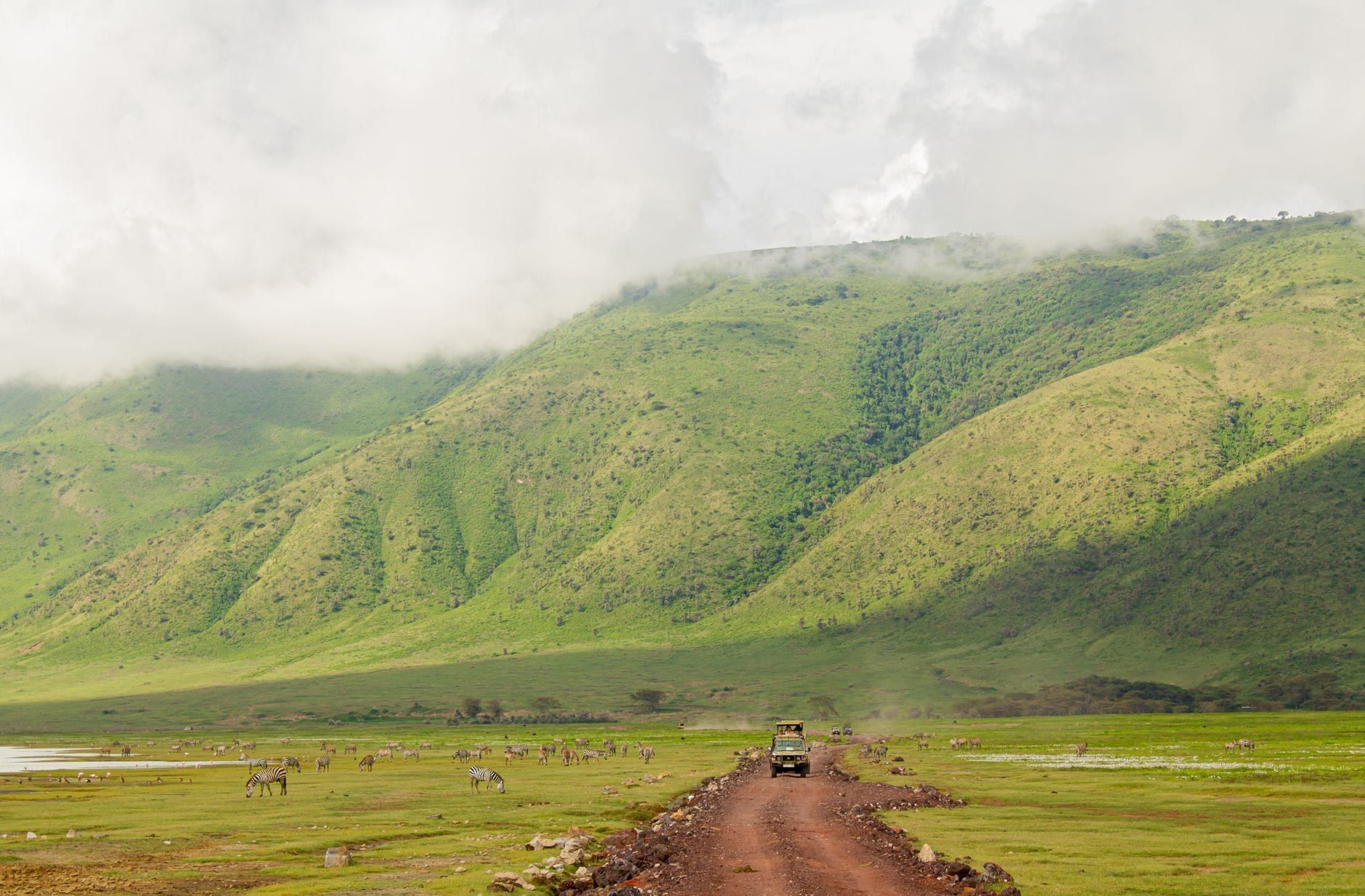
April and May are the contrarian pick, and the case is real. The caldera turns lush, wildflowers bloom in May, lodge prices fall to a fraction of high-season rates, and you can drive the crater floor with remarkably few other vehicles around. Because the wildlife never leaves, game viewing still works — long grass hides some animals, but it draws black rhinos out into the open to graze.
The catch is logistics. Rain falls as heavy thunderstorms, tracks turn to mud, and the occasional road becomes impassable until it dries. Mist can also shroud the rim. If your itinerary is flexible and your tolerance for weather reasonable, this is the best value-for-sighting window in Tanzanian safari travel.
The short rains (November to mid-December)
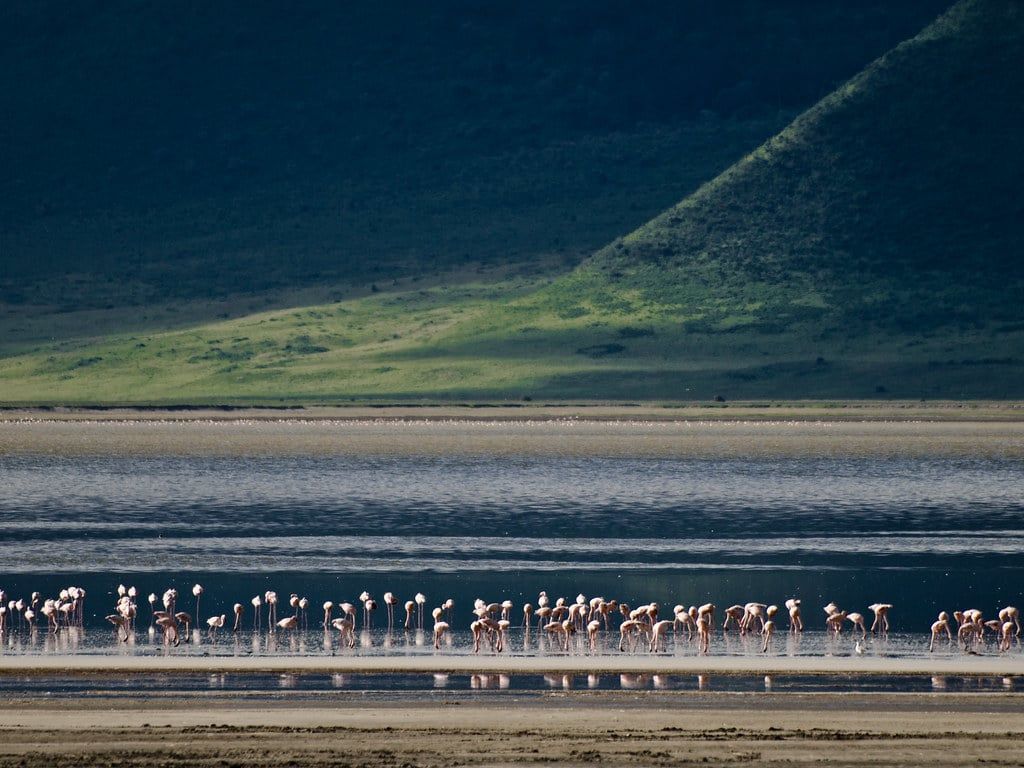
November's rains arrive as afternoon storms that rarely disturb a morning game drive, which makes this the gentlest wet-season option. Newborn grazers appear, and the first Palearctic migrant birds land with the November rain — the start of the November–April period when Ngorongoro's 500-plus species are at their most colorful and resident birds show breeding plumage.
Photographers should note December specifically: the rains taper from mid-month, leaving green landscapes under clear skies, and shoulder-season prices hold until the Christmas-week premium lands. Storm light over a fresh-green caldera is worth the gamble.
Ngorongoro Crater Month by Month
Here's the short version of every month — weather, traffic, price and the one thing each does best.
January. A quiet short-dry month with green scenery and thin crowds. The migration herds are building on the Ndutu plains, readying for calving.
February. Calving peaks, with roughly half a million wildebeest born within weeks and predators in close attendance. The busiest of the green months, and priced accordingly.
March. Early-month days stay dry and drives run smoothly; the long rains begin late in the month. Book the first half if you want March's green without its mud.
April. Peak long rains — near-daily thunderstorms, muddy descent tracks, grey skies. In exchange, low-season rates and near-empty roads.
May. The rains ease and wildflowers bloom across the highlands. Lowest prices of the year and very few vehicles on the floor.
June. The coolest month, green from the rains, with the fewest crowds of any dry-season window. A strong contender for best all-round month.
July. Prime game viewing begins in earnest as grass shortens and animals gather at water. Crowds and prices climb steeply — book well ahead.
August. The heaviest vehicle traffic of the year and peak lodge rates, coinciding with northern-hemisphere school holidays. Sightings justify it; the queue at the gate might not.
September. Still dry, still excellent, with crowds thinning slightly after August. One of the two smartest dry-season months.
October. The end of five dry months: prey animals are weakened, so hunt sightings are most likely now. Short rains approach late in the month.
November. Short rains begin as afternoon storms, migrant birds arrive, and prices drop to shoulder level. Mornings on the floor stay workable.
December. Rains taper from mid-month, leaving green landscapes under clear skies — the best photography combination of the year. Expect a premium over Christmas week.
Best Time by Priority: Match Your Month to Your Goal
The month you pick should follow from what you actually came for. Here's the mapping.
Maximum sightings means June to October, when short grass and waterhole concentrations stack the odds in your favor. Fewest crowds means November, early December, May or June — mornings in these months can feel near-private. Lowest cost means April and May, when green-season rates apply and the wildlife is the same as July's, just harder to spot in the long grass.
The migration and calving run mid-December to late March on the Ndutu plains — again, that's the conservation area beyond the crater rim. Birders get the best of it November to April, when migrants swell the resident 500-plus species. Black rhino is a split decision: dry-season short grass makes them easier to see, but wet-season grass pulls them into the open to feed, so you're reasonably covered either way.
Some goals are season-proof. The Big Five in a single day is realistic in any month — resident lion, leopard, buffalo, elephant and rhino share that compact floor, which makes Ngorongoro one of Africa's easiest places to achieve it. Highland walks and a Kilimanjaro add-on, though, want June to October for dry trails. For everything the caldera doesn't cover, from Oldupai Gorge to Empakaai Crater, our rundown of things to do in Ngorongoro sorts the options by season.
| Dry season (June–October) | Green season (Nov–mid-May, best Apr–May) | |
|---|---|---|
| Wildlife | Excellent — short grass, waterhole concentrations | Good — long grass hides animals, rhinos graze in the open |
| Crowds | Very high in Jul–Sep; moderate in Jun and Oct | Very low, especially Apr–May |
| Price | Peak rates, book 6–12 months ahead | Green-season discounts, often bookable last-minute |
| Weather | Minimal rain, cool mornings | Afternoon storms; long rains can bog down tracks |
| Best for | Wildlife density and easy spotting | Birding, newborns, photography, value |
Crowds and Vehicle Traffic: What Peak Season Really Looks Like
The numbers deserve spelling out. On a peak day in July or August, more than 1,000 safari vehicles can descend into the crater, and over 100 can be queuing at the gate before 6:30am. Across the whole Ngorongoro Conservation Area, visitation hit a record 752,232 in 2023 — up from 191,614 in 2020/21 — and the authority is targeting more than a million a year. The trend points one direction.
The crater's shape amplifies all of it. The floor covers only about 260 km² — roughly 3% of the conservation area — so those vehicles share a compact road network where off-road driving is banned. On paper, Tanzania caps gatherings at five vehicles per animal or kill; in practice, enforcement is inconsistent, and a lion or rhino sighting in August can draw a wall of safari roofs.
Timing beats the worst of it. Access runs 6am to 6pm with no lodging inside the crater, so the fleet descends together at opening — unless you sleep on the rim the night before and reach the descent gate for the 6am opening from minutes away. Staying down in Karatu saves money but means a pre-dawn drive of roughly an hour to the gate. In the short rains or May, the same floor can feel almost private.
Costs, Fees and Booking by Season
Park fees don't move with the seasons — lodges do. Foreign non-resident entry is US$70.80 per adult per 24 hours (US$23.60 for children 5–15), and descending into the crater adds a US$295 service fee per vehicle, not per person. That per-vehicle fee is why most visits are one-day affairs: split a 4x4 among four to six travellers and the descent costs roughly US$49–74 each, which makes Ngorongoro Tanzania's priciest park day and pushes most itineraries toward a single, focused descent. Current hours and fees are worth re-checking before you travel, since NCAA tariffs change with little notice, usually each 1 July.
Season changes what you pay for a bed, not for a gate. April and May bring lodge rates described by operators as a fraction of high-season prices, with discounts often available last-minute. July through September is the opposite: comparing safari tours early matters, because the best rim lodges for June to October travel book six to twelve months out. A useful middle path is pairing one rim night (for the first-descent advantage) with cheaper Karatu nights either side — see our rundown of lodges in and around Ngorongoro for the trade-offs.
How many days, then? One full crater day is the standard, and the fee structure explains why. Two days suit wildlife obsessives with budget to spare — different light, different drives — and anyone combining the crater with the Ndutu plains in calving season effectively gets a second ecosystem for the same trip. Add Oldupai Gorge (about 90 minutes) if you're driving on toward the Serengeti.
Packing for the Season You Pick
Whatever month you choose, pack for two climates in one day. Rim mornings at 2,300 m run 0–5°C with mist, while the floor 600 m below warms quickly after sunrise — a fleece, windproof layer and warm hat earn their place in July just as much as in January. Lodges often have no heating beyond a fireplace, so the cold finds you at dinner too.
From there, your season decides the extras:
- Rain shell and waterproof camera bags for November–May travel.
- Scarf or buff against dry-season dust, plus high-SPF sunscreen.
- Binoculars and a 300 mm-plus lens — off-road driving is banned, so distant sightings stay distant.
- Sturdy footwear for muddy boardwalks and rim walks in the rains.
The binocular point is the one people regret most. You cannot drive off-road inside the crater, so a rhino grazing 400 m away stays a grey smudge without glass — bring the best pair you can.
Frequently asked questions
What is the best month to visit Ngorongoro Crater?
June to October for game viewing — short grass and waterhole gatherings make wildlife easiest to find. Within that, late June, September and early October offer the same conditions with fewer vehicles than the July–August peak. February is the month if the wildebeest calving on the Ndutu plains is your priority.
Is Ngorongoro worth visiting in the rainy season?
Yes. The roughly 25,000 large animals inside the caldera are year-round residents, so sightings stay strong even in the rains. April and May add wildflowers, vivid green scenery and the lowest lodge prices of the year; the trade-off is mud and the occasional grey, misty day.
When can I see the Great Migration near Ngorongoro?
The migration herds — around 1.5 million wildebeest and zebra — graze the Ndutu and western plains of the wider Ngorongoro Conservation Area from roughly mid-December to late March. The mass calving, about 500,000 calves in a few weeks, peaks around February. None of this happens on the crater floor itself.
How cold does it get on the crater rim?
Cold. The rim sits at roughly 2,200–2,300 m, with nights of 0–5°C and mist even during the dry season, while the floor 600 m below warms to mild afternoons. Pack a fleece, a windproof layer and a warm hat for 6am gate arrivals.
What is the worst time to visit Ngorongoro Crater?
There's no month when wildlife disappoints, but late March through May is the hardest stretch — near-daily thunderstorms, muddy tracks and mist-shrouded views. Many travellers still pick it deliberately for empty roads and low-season rates.
How many days do you need in Ngorongoro Crater?
One full day is standard, and the fee structure explains why: entry is US$70.80 per adult per 24 hours and the crater descent costs US$295 per vehicle, with no lodging inside the crater and access limited to 6am–6pm. Two days suit wildlife lovers with budget to spare.
How crowded does the crater get in peak season?
In June to October, more than 1,000 safari vehicles can descend in a single day, and over 100 queue at the gate before 6:30am. Overall NCA visitation hit a record 752,232 in 2023. November, early December and May are the quietest windows.
Are the Ngorongoro fees lower in low season?
No. Entry is US$70.80 per adult per 24 hours (US$23.60 for children 5–15) plus a US$295 crater service fee per vehicle, charged year-round under the current NCAA tariff. Season moves lodge rates, not park fees — though NCAA tariffs can rise each 1 July with little notice.