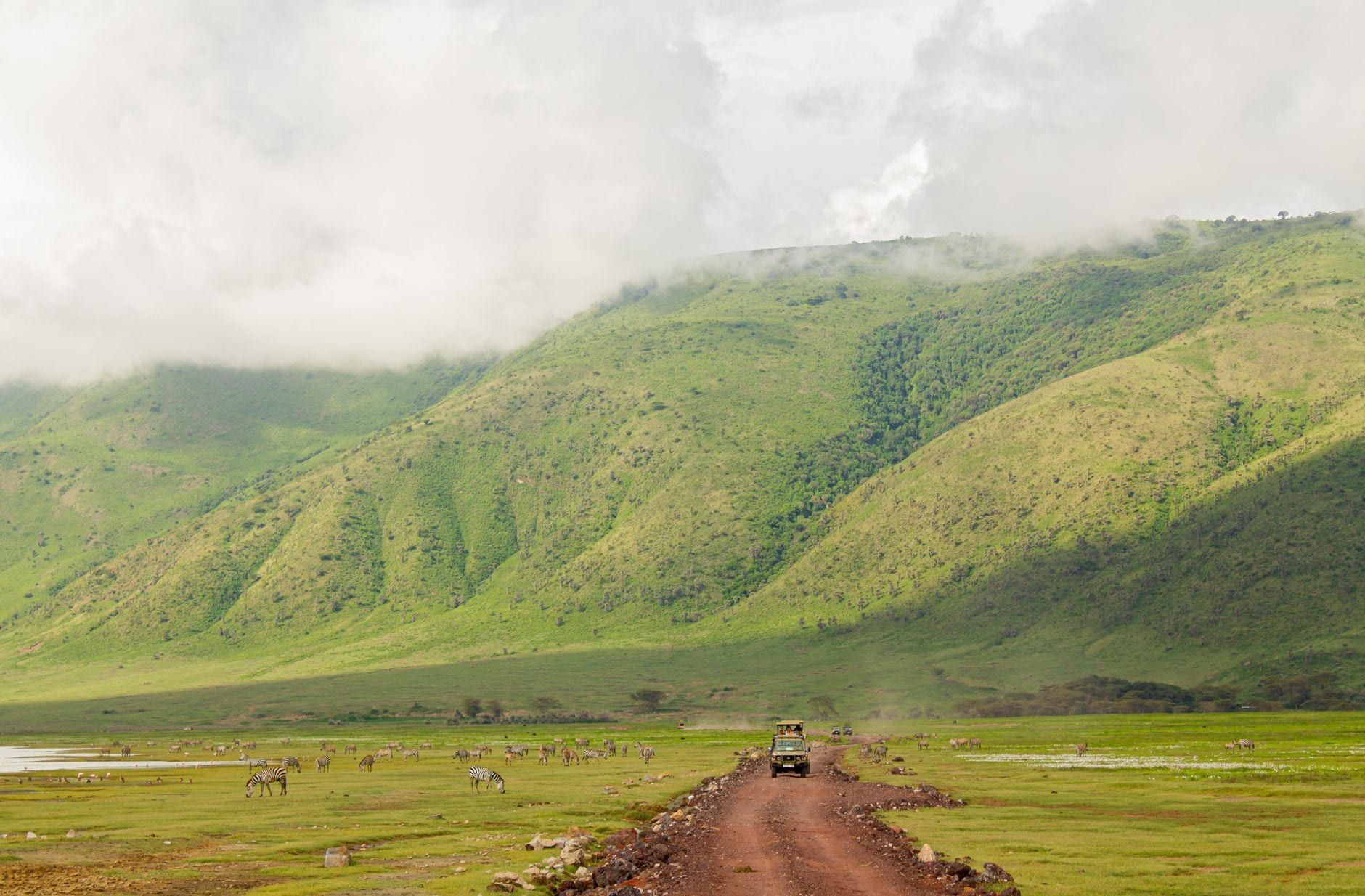
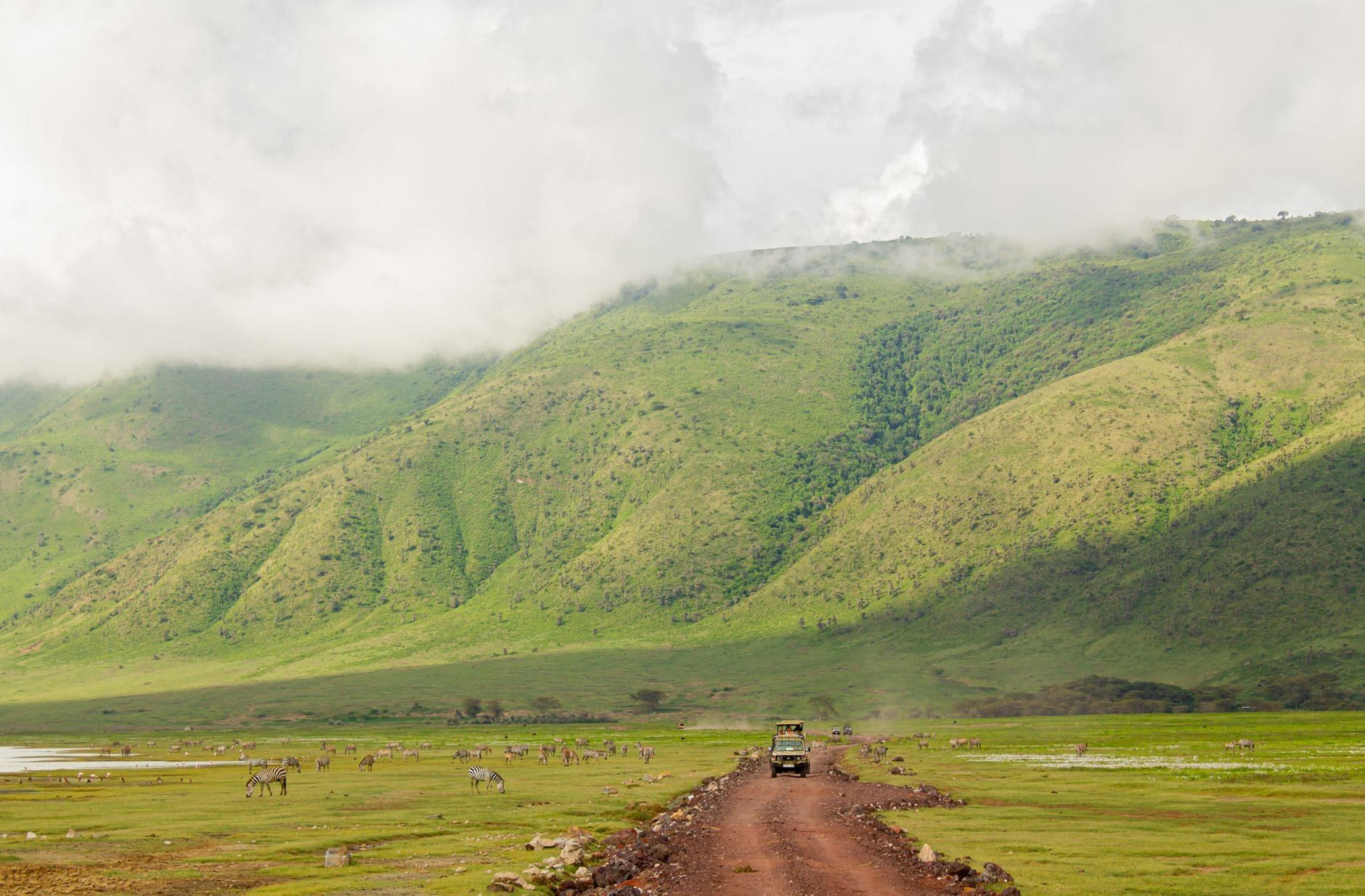
Roughly 25,000 large mammals live inside a single 260-square-kilometre volcanic bowl in northern Tanzania, and almost all of them are visible from a game-drive vehicle in one morning. That's the pitch for Ngorongoro Crater, and unlike most safari promises, it holds up. The floor holds the full Big Five, the densest known lion population in Africa, and one of East Africa's best black-rhino populations — plus a soda lake that turns pink with flamingos when conditions are right.
This guide covers what actually lives in the crater, your honest odds for each animal, and how to spend one day on the floor so the sightings come to you. For planning basics beyond wildlife, start with our introduction to Ngorongoro and the full Ngorongoro Crater safari guide.
Ngorongoro at a Glance: Why the Animals Are Here in Such Numbers
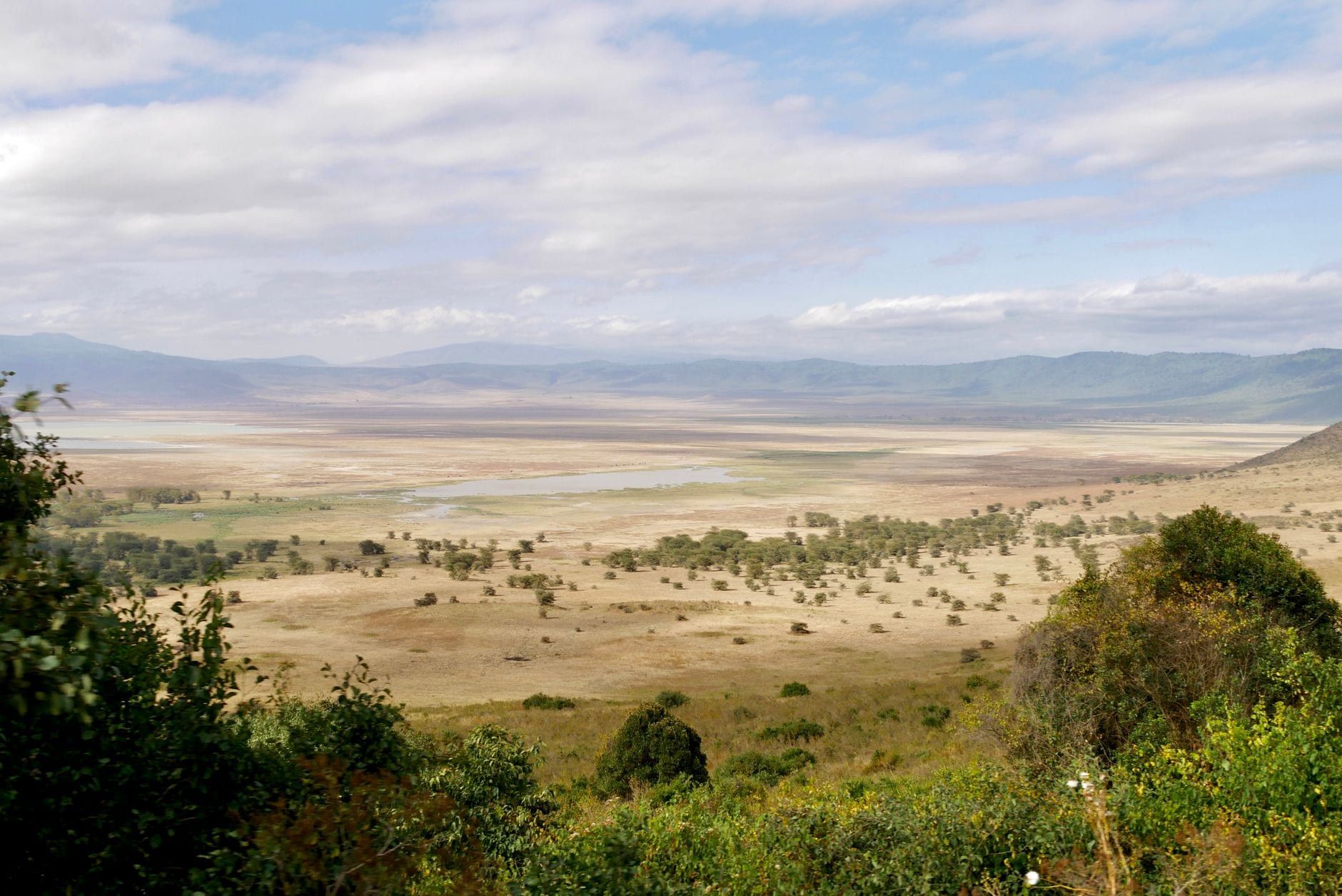
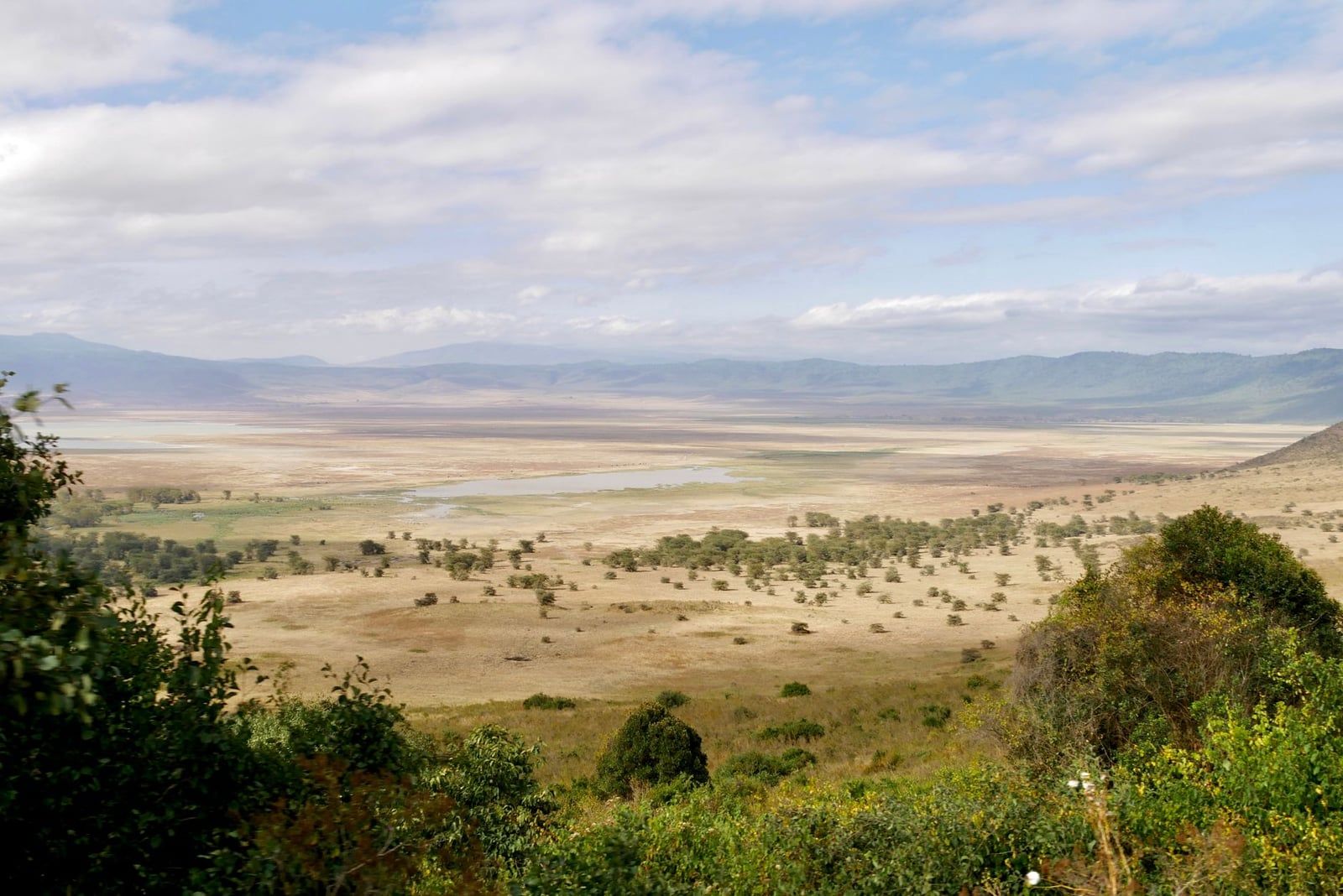
Ngorongoro is the world's largest intact, unfilled volcanic caldera: 16–19 km across, with a floor of about 264 sq km sitting at roughly 1,800 m and rim walls 400–610 m high. A giant volcano collapsed here about 2.5 million years ago, and the bowl it left behind became a natural game reserve before anyone drew a boundary on a map.
Three things pack the floor with animals. The volcanic soils grow mineral-rich grass that fattens grazers fast. Permanent water — Ngoitokitok Springs, Gorigor Swamp and the shallow soda lake at the centre — means nothing has to leave in the dry season. And the steep walls discourage movement in and out, so most crater animals are effectively resident. The result is around 25,000 large mammals and more than 500 bird species, a density UNESCO cited when it inscribed the area as a World Heritage Site in 1979.
One nuance worth knowing before you go: the crater sits inside the 8,292-sq-km Ngorongoro Conservation Area, a multiple-use landscape where semi-nomadic Maasai herders live and graze cattle alongside wildlife — not a national park. That coexistence is the NCA's founding idea, and you'll see red-shukaed herders on the rim road on your way down.
The Big Five in Ngorongoro: What You'll Really See (and Your Odds)
Yes, all five are here, and a single-drive Big Five is a realistic goal — Ngorongoro is arguably the best place in Africa to attempt it. But the odds differ sharply by species, and honest expectations make for a better day than a checklist you quietly abandon by noon.
| Animal | Your odds | Best place to look |
|---|---|---|
| Lion | Near-certain | Open grassland and Gorigor Swamp edges |
| Buffalo | Near-certain | Herds across the floor and swamps |
| Elephant | Likely | Lerai Forest, Ngoitokitok Springs |
| Black rhino | Likely (bring binoculars) | Gorigor Swamp, Lerai–Magadi axis |
| Leopard | Lucky | Rim forest, Lerai Forest, dawn and dusk |
Lions are the crater's signature act. Somewhere between 60 and 100 cats live here — reputedly the densest lion concentration in Africa — and because they've grown up around vehicles, they nap in the open a few metres from your wheels. Guides find prides most mornings; you will not need luck. Bring the binoculars anyway for the rhino.
Black rhino: the sighting that justifies the trip
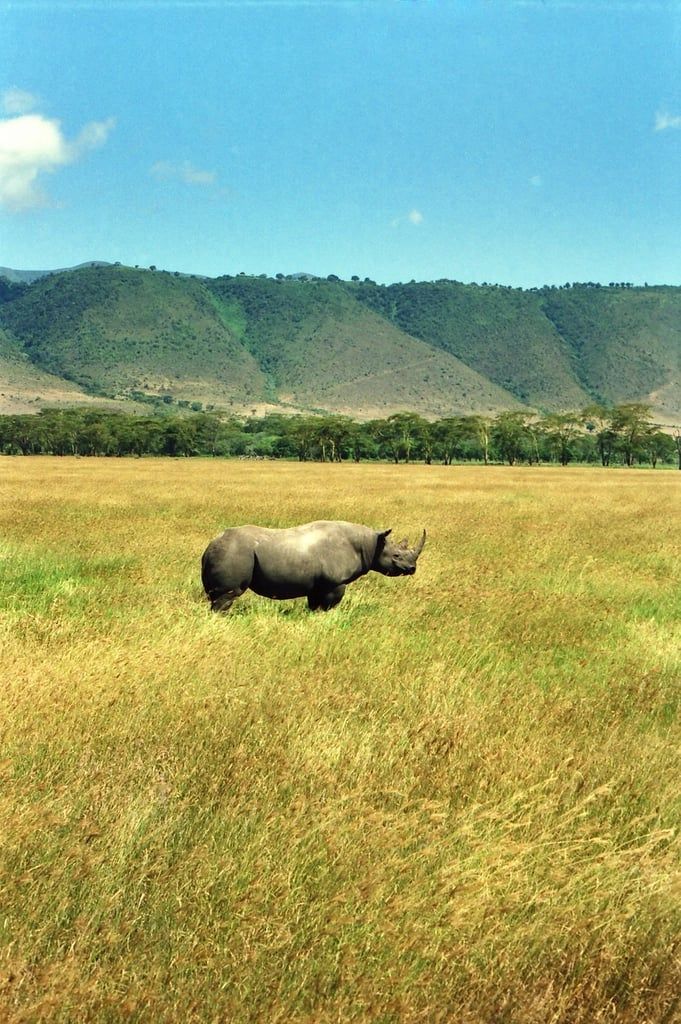
About 55 black rhinos live in the crater, which makes this one of East Africa's most reliable places to see a species that has vanished almost everywhere else. The history is brutal: the population fell from roughly 108 animals in the mid-1960s to 13 by 1993, hammered by poaching. Monitoring, anti-poaching patrols and restocking rebuilt it, and every rhino now carries a transmitter in its horn so rangers can track it daily.
How you'll see them: at distance. Rhinos graze the open slopes and swamp edges, usually as grey silhouettes a few hundred metres off the track. Scan the Gorigor Swamp and the grassland between Lerai Forest and Lake Magadi. A guide with a good radio network matters here — the six or seven vehicles sharing a rhino sighting will all have been tipped off.
Elephant: the old tuskers
No breeding herds live inside the crater — the cows and calves stay elsewhere in the Conservation Area. What you get instead is up to 70 old bulls, many carrying outsized tusks, working the Lerai Forest, Gorigor Swamp and the water at Ngoitokitok Springs. A few of these tuskers are genuinely enormous, and photographers prize them for it. If your heart is set on elephant families, the Serengeti or Tarangire delivers those.
Buffalo and leopard: the easy one and the hard one
Buffalo are a given — thousands of them, in big herds spread across the floor and wallowing in the swamps. The Lerai Forest herds are the ones to treat with respect; buffalo there have a reputation for temper, and rules about staying in your vehicle exist partly because of them.
Leopard is the holdout. Small numbers live on the crater floor and in the montane forest on the rim, and the limited wooded habitat keeps them secretive. Your best shots are dawn and dusk in the Lerai Forest or the wooded edges near the descent roads. Most visitors who claim a full Big Five day missed the leopard — accept it as the bonus, not the benchmark. Book a dedicated crater safari with a driver-guide who knows the leopard's favoured trees and your odds improve considerably.
Beyond the Big Five: Predators and Plains Game Most Visitors Miss
The Big Five gets the marketing, but the crater's supporting cast is what fills your memory card. Around 400 spotted hyenas live here — the second-largest carnivore in the ecosystem and, at night, the lions' chief rival. At midday they flop on the pale flats east of Lake Magadi, sometimes a dozen at a time, digesting whatever the night produced.
Cheetah and the smaller hunters
Cheetahs vanished from the crater floor in the 1990s and recolonised it after 2000 — a rare good-news story. They now hunt the gazelle plains regularly, and in the dry season's short grass a morning drive has a fair chance of finding one on a termite mound or mid-chase. Servals, golden jackals, black-backed jackals and bat-eared foxes round out the roster; the serval, pouncing on rodents in the long grass, is the prize for patient observers.
Plains game: the 25,000, itemised
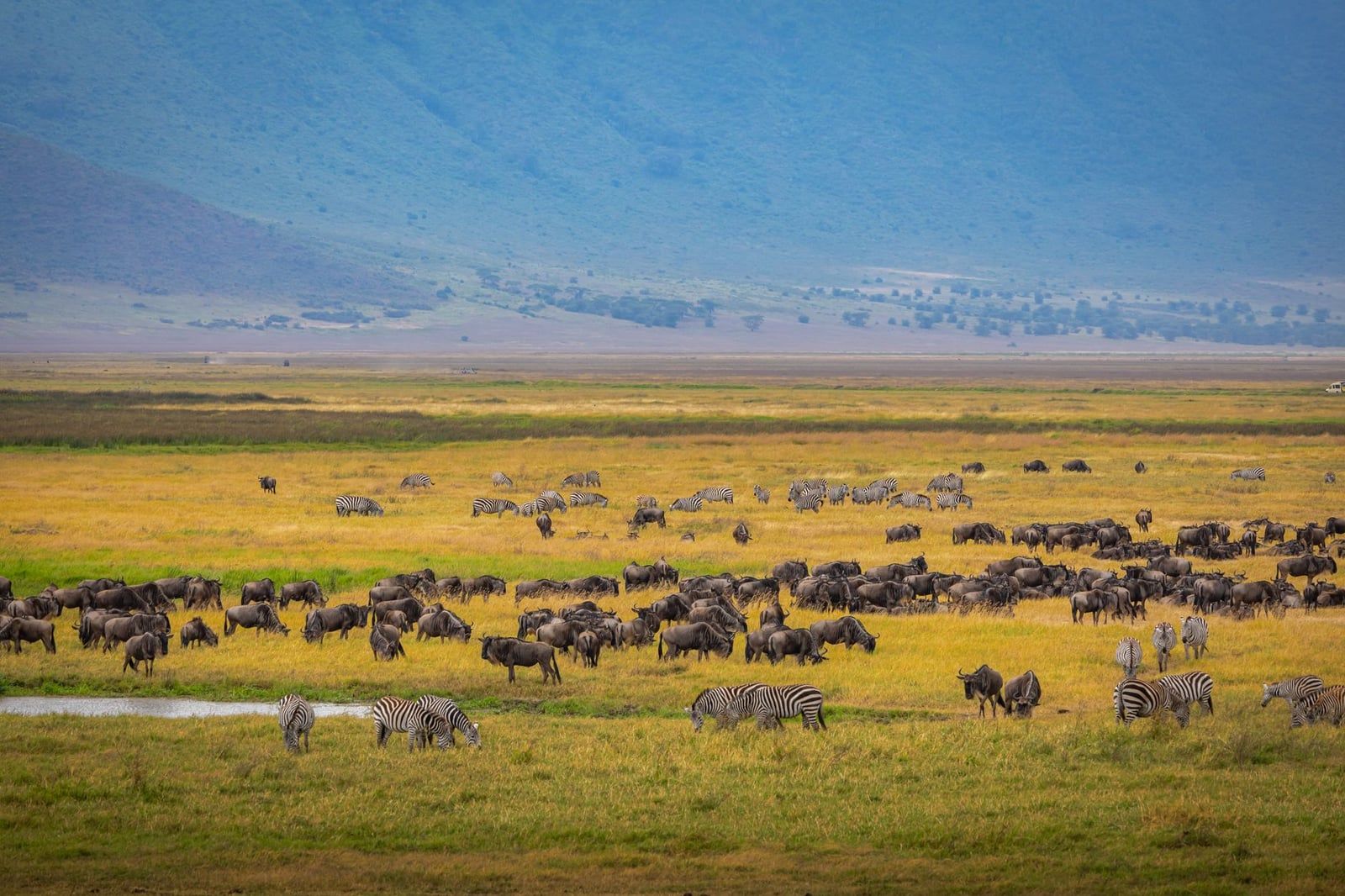
The bulk of that 25,000 figure is grazers. Roughly 10,000 wildebeest and 5,000 zebra are resident on the floor year-round — a permanent, miniaturised migration that never leaves. Thomson's and Grant's gazelles, topi, Coke's hartebeest, Defassa waterbuck, eland and bushbuck fill out the list. In the dry season, when the grass is short and the animals crowd the permanent water, the floor can look stocked rather than wild.
Hippos
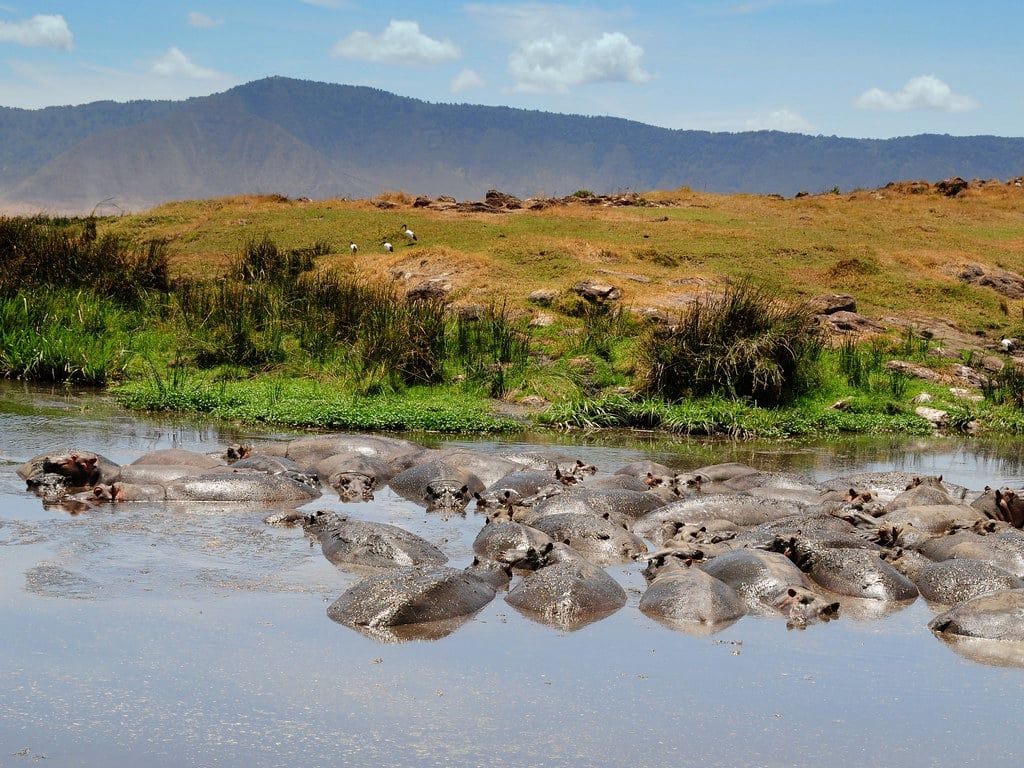
Hippos wallow at Mandusi Hippo Pool near the descent roads and at Ngoitokitok Springs, where the designated picnic site sits right beside the water. You'll hear them before you see them — that deep grunting carries. The Gorigor Swamp hides more, along with the lions that use the reeds as an ambush point.
Birdlife: 500+ Species and the Lake Magadi Flamingo Show
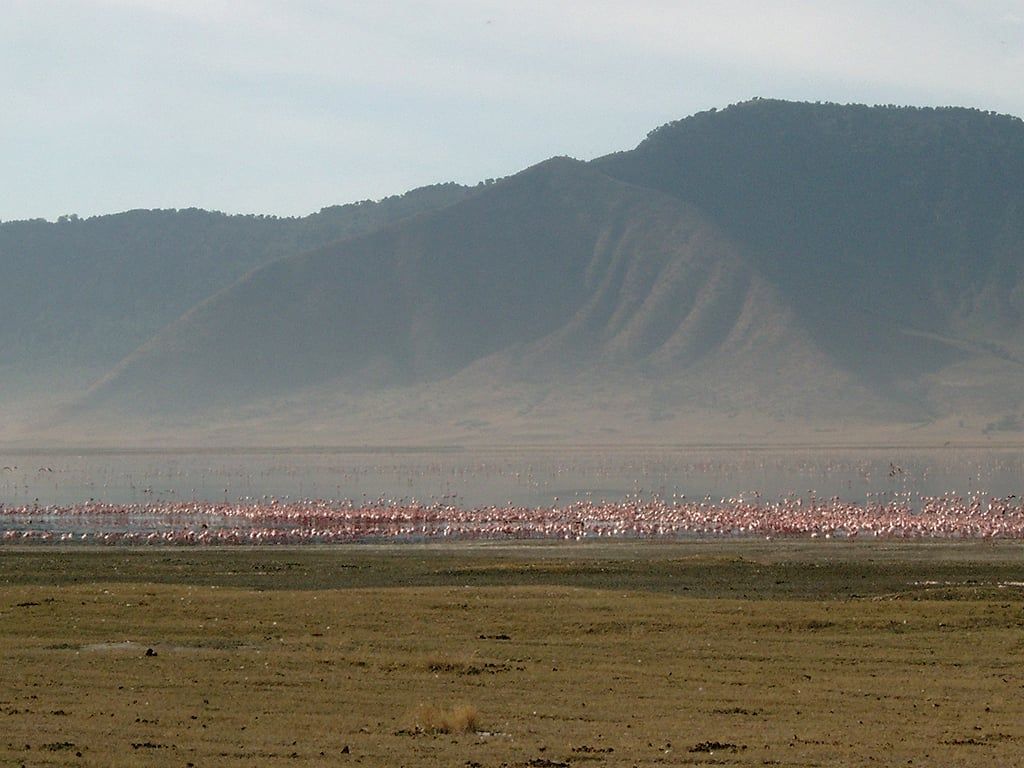
More than 500 bird species are recorded in the Ngorongoro Conservation Area, and the crater alone could fill a week for a birder. The headliner is Lake Magadi, the shallow soda lake at the floor's centre: when water levels and algae suit, thousands of lesser flamingos — plus greater flamingos wading the shallower margins — turn the shoreline pink. It's the crater's signature spectacle, and your guide will know within a radio call whether the flock is in.
The grasslands carry their own giants: ostriches, the world's largest bird, and Kori bustards, the heaviest bird that can still fly, both striding the open plains, with secretary birds stalking through the grass on gangly legs and grey crowned cranes calling from the wet edges. Overhead, augur buzzards and martial eagles work the thermals, and vultures drop onto any lion kill within minutes.
Lerai Forest is where the specials hide — Fischer's lovebirds, Hildebrandt's starlings and turacos in the yellow-barked trees. Keep an eye on your lunch at Ngoitokitok, too; the black kites there are accomplished pirates. From November to April, migrants from Europe and North Africa swell the counts, which is one quiet argument for a green-season visit.
Animals You Won't See in the Crater (and Why)
Two common savanna mammals are missing from the crater floor, and one absence is a genuine puzzle. Giraffes can't easily navigate the 400–610 m caldera walls, and the floor lacks the open-woodland browse they prefer — you'll see plenty elsewhere in the Conservation Area, just not down below. Impalas are absent too, and nobody has conclusively explained why. Ask your guide; everyone has a theory.
- Giraffe: walls too steep, no suitable browse; common elsewhere in the NCA
- Impala: absent for reasons no one has explained
- Crocodile: no suitable habitat — see the Grumeti or Mara rivers instead
- African wild dog: rare and erratic; never count on it
Snakes do live here, mostly in the swamps, and they're so well camouflaged that even keen-eyed visitors almost never spot one. If a Nile monitor or a puff adder crosses the track, count it as a bonus.
When and Where: Best Seasons, Best Hours, and a One-Day Game Plan
Wildlife viewing in the crater is good year-round because the floor holds permanent water — animals can't leave even if they wanted to. What changes is how easily you see them. Our detailed rundown of the best time to visit Ngorongoro covers pricing and crowds; for animals, the short version follows.
Seasons
June to October, the long dry season, is the easiest viewing: short grass, no rain, and everything concentrated around the lake, springs and swamps. March and April are the wettest months — tracks turn to mud and long grass hides the smaller animals, though the trade is green scenery and far fewer vehicles. One big seasonal draw sits just outside the crater: the Great Migration, over a million wildebeest and some 72,000 zebra, reaches the Ndutu plains at the crater's western edge in the rainy season, and February brings mass calving there. The migration passes beside the crater, never across its floor — the crater's own 10,000 wildebeest are permanent residents.
Hours of the day
The first three hours after the 06:00 gate opening are the ones that matter. Predators hunt in the cool dawn light, hyenas are still finishing overnight kills, and the vehicle count is at its lowest. By late morning most cats are flat and asleep in the sun; use the midday lull for the lake, the picnic site and the forest. Activity picks up again from mid-afternoon. Gates close at 18:00, and the Seneto descent gate shuts at 16:00 — check current gate hours and entry fees before you plan the day, since the schedule is enforced without exceptions.
A one-day route that works
Descend at 06:00 through the mist — the classic reveal as the forest opens onto the floor. Head first for Gorigor Swamp while the light is low and the cats are moving: lions ambush in the reeds, buffalo wallow, and the open slopes above the swamp are your best rhino country. From there, swing to Lake Magadi for flamingos and the hyenas loafing on the eastern shore, then east to Mandusi Hippo Pool and Ngoitokitok Springs for hippos, drinking elephants and a leg-stretch at the picnic site. Finish in Lerai Forest among the old tuskers and turacos, then ascend via the Lerai gate before the afternoon queue builds. One focused loop, roughly a half-day plus lunch — which is exactly what the crater permit covers.
Want the dawn start without the pre-dawn drive? Sleep at a rim lodge the night before, or book a private crater tour and set the pace yourself. Karatu, an hour from the gate, is the cheaper base. For everything else the area offers beyond the floor, see our guide to things to do in Ngorongoro.
Conservation: Precious, Protected, and Precarious
The density that makes Ngorongoro a guaranteed-sighting destination is also what makes it fragile. The rhino story tells it: 108 animals in the mid-1960s, 13 by 1993, roughly 55 today, with every surviving animal tracked by horn transmitter and patrols funded in part by your entry and descent fees. That recovery took three decades and is not finished.
The lions face a different problem. A closed population inside a caldera is genetically isolated and vulnerable to disease — a single epidemic could cut through it. The conservation group KopeLion works to stabilise the pride alongside the Maasai communities whose livestock share the landscape. That coexistence, wildlife and herders under one multiple-use system, is the NCA's founding experiment and its ongoing challenge.
Your part is simple. Stay on the tracks, stay in the vehicle except at designated picnic sites, never feed anything, and keep the 25 km/h limit — no more than five vehicles may gather around one animal or kill. Follow those rules and the crater keeps delivering the sightings it's famous for. To see how the area fits a wider northern-Tanzania route, browse our Ngorongoro tours.
Frequently asked questions
Can you see all of the Big Five in one day at Ngorongoro Crater?
It's realistic but never guaranteed. Lion and buffalo are near-certain, elephant and black rhino are likely, and leopard is the usual holdout — small numbers, mostly in the rim forest, and best searched for at dawn or dusk. Ngorongoro is arguably Africa's best single-day Big Five attempt.
Why are there no giraffes in Ngorongoro Crater?
The 400–610 m caldera walls are hard for giraffes to navigate, and the floor lacks the open-woodland browse they feed on. They're common elsewhere in the Ngorongoro Conservation Area. Impalas are also absent from the floor, for reasons no one has conclusively explained.
How many animals live in the Ngorongoro Crater?
About 25,000 large mammals plus more than 500 bird species. That includes roughly 10,000 resident wildebeest, around 5,000 zebra, 60–100 lions, about 400 spotted hyenas and roughly 55 black rhinos.
What is the best time of year for wildlife viewing in Ngorongoro?
Viewing is good year-round, but June to October is easiest — dry, short grass, animals concentrated at permanent water. November to May brings green scenery and migratory birds (November–April), February brings wildebeest calving on the Ndutu plains just west of the crater, and March–April are the wettest months.
Are there crocodiles or snakes in the Ngorongoro Crater?
No crocodiles — the habitat isn't suitable, and the nearest ones live in the Serengeti's Grumeti and Mara rivers. Snakes are present, mainly in the swamps, but so well camouflaged that sightings are rare.
Where are the best places inside the crater to see animals?
Gorigor Swamp for rhino, buffalo and lions; Lake Magadi for flamingos and hyenas on the eastern shore; Mandusi Hippo Pool and Ngoitokitok Springs for hippos and elephants; and Lerai Forest for old bull elephants, leopard and forest birds.
Is Ngorongoro Crater better than the Serengeti for seeing animals?
They trade different strengths. The crater offers unmatched density and a realistic one-day Big Five; the Serengeti offers sheer scale and the Great Migration. The two combine easily — they're about three hours apart, and the migration's February calving happens on the Ndutu plains within the NCA itself.
How likely am I to see a black rhino in Ngorongoro?
Your odds are good — roughly 55 rhinos live here after the population recovered from a low of 13 in 1993, making it one of East Africa's best black-rhino destinations. Scan Gorigor Swamp and the grassland between Lerai Forest and Lake Magadi, and bring binoculars.